Candied Kumquat Recipe: The Tiniest Citrus Fruit With An Edible Peel
The Small But Mighty Kumquat

Elevate any snack at a moment’s notice—and maybe attract some health and wealth in the New Year—with this candied kumquat recipe.
Meet the kinkan (kumquat). Tiny, tart and tantalizing, these little citrus fruits are ideal for a simple kumquat recipe and are easy to find at local supermarkets throughout winter in Japan. Not much larger than an olive, a kinkan ranges in diameter from two to four centimeters. But despite their miniature size, kumquats are packed with flavor and nutrition, and unlike other citrus fruits, they’re often enjoyed whole—skin and all.
Eaten raw, the thin, crunchy peel yields easily to the teeth, the orange orbs bursting with tangy juice. Fragrant oils spray the air, releasing a delicate floral aroma from the pores of the fruit’s sweet, lustrous skin.
When boiled with sugar, kumquats become tender and glossy, tempering the sourness of the fruit’s flesh and preserving its fragrance in a thick nectar. A versatile topping for everything from yogurt to pancakes, we share a simple recipe for kumquats in syrup below.
But first, a little background on the tiniest citrus fruit.
An Auspicious Japanese New Year Food
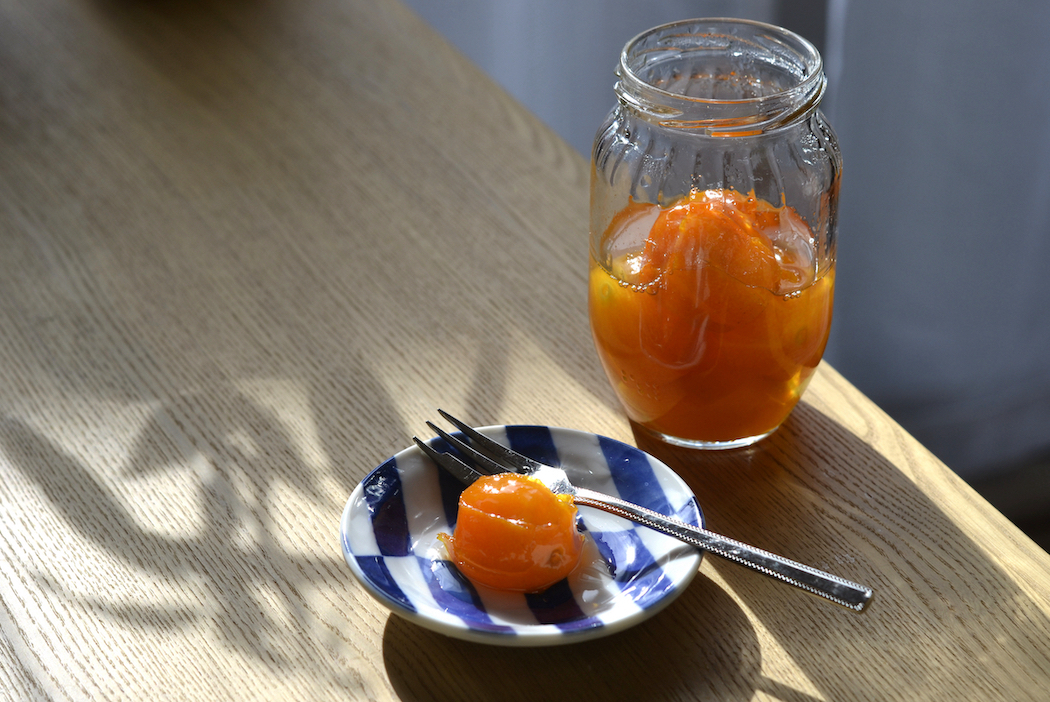 © Photo by Rika Hoffman
Known as kinkan no kanroni in Japanese, candied kumquat is a sweet treat, home remedy and palate cleanser rolled into one—which helps explain its popularity among osechi ryori (Japanese New Year cuisine) dishes. It’s the equivalent of eating cranberry sauce at Thanksgiving, with a bright, acidic flavor that cuts through the otherwise heavy (and rather brown—at least in the case of American Thanksgiving) meal.
Like other Japanese New Year foods, kinkan has a symbolic meaning that involves wordplay. 金柑 (kinkan; “kumquat”) is a homonym of 金冠 (kinkan; “golden crown”). If you want to attract wealth in the New Year, a kumquat might just be your golden ticket!
Kinkan is also an auspicious food to eat during the winter solstice in Japan. During this time of year, it’s said that eating foods with two letter n’s (ん and ン in hiragana and katakana) in their names attracts luck. Besides kinkan, this includes foods like ぎんなん (ginnan; “gingko nuts”), にんじん (ninjin; “carrots”) and レンコン (renkon; “lotus root”).
Kumquat Health Benefits
 © Photo by Rika Hoffman
Need another reason to include kinkan in your diet? Kumquats are full of health benefits, including:
- High amounts of dietary fiber (especially the peel) for satiety and improved digestion
- Antioxidants like vitamin C, which boosts the immune system, promotes iron absorption and stimulates collagen production
- Moderate amounts of vitamin A, which is beneficial for the immune system, reproductive system and vision
Popular in Chinese medicine, eating candied kumquats is also a traditional Japanese remedy for sore throat and cough. Steep one or two kumquats in a mug of hot water with a teaspoon of syrup and sip your way to a soothed throat.
Kinkan no Kanroni (Candied Kumquat) Recipe
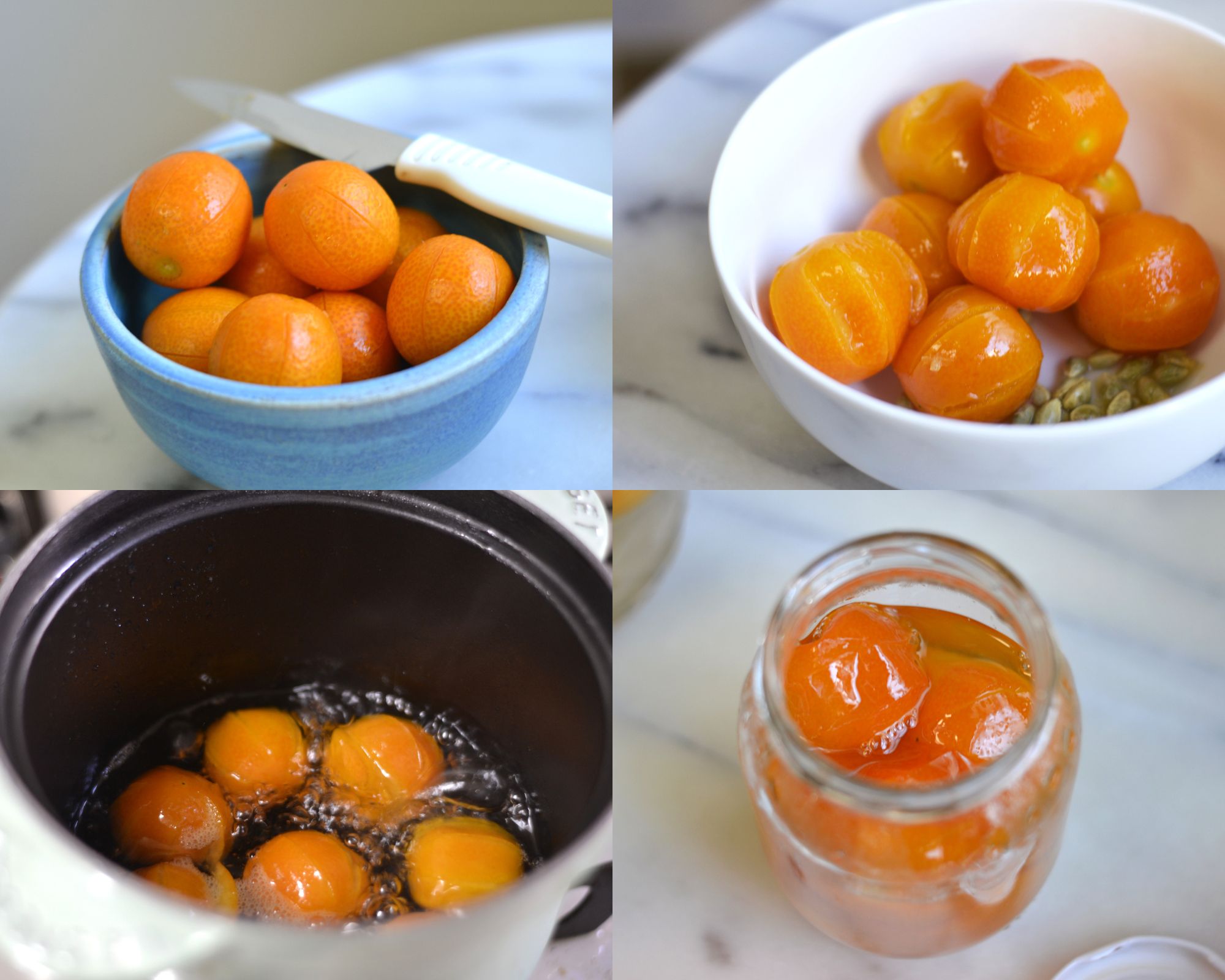 © Photo by Rika Hoffman
Ingredients
- 500 grams (approximately 3 cups) kumquats
- 250 grams (1 ¼ cup) sugar
- 400 milliliters (approx. 1 ⅔ cup) water
Instructions
- Wash kumquats and make 7-8 vertical cuts into the skin with a knife. This will make it easier to take out the seeds later.
- Submerge the kumquats in a pot of water (they should be just covered) and boil for 3-4 minutes.
- Drain the kumquats and allow them to cool.
- Taking each kumquat one by one, gently remove the seeds by inserting a wooden skewer or chopsticks into the vertical cuts you made earlier.
- Combine 400 milliliters of water and 250 grams of sugar in a pot and bring to a boil.
- Add the kumquats. They should all fit in an even layer at the bottom of the pot.
- Bring the pot of kumquats and syrup back up to a boil over medium heat.
- Lower the heat and cover with an otoshibuta (drop lid) to simmer for 30 minutes. If you don’t have an otoshibuta, a piece of parchment paper cut into a circle to fit the pot works just as well.
- Once the kumquats have softened and the syrup has thickened, turn off the heat and allow them to cool.
- Transfer your kumquats with syrup into a jar. Due to the high sugar content in this recipe (50% of the weight of the kumquats), it keeps pretty well. Store in the fridge for up to one month, or in the freezer for up to three months.
How To Use Candied Kumquat
 © Photo by Rika Hoffman
There are numerous ways to use these plump, candied kumquats and their syrup:
- Top yogurt or ice cream with chopped kumquats and a drizzle of syrup
- Infuse your tea with candied kumquat and a spoonful of syrup
- Replace the simple syrup in a cocktail recipe with sweet kinkan nectar
- Soak cake layers with kinkan syrup for added flavor and moisture
- Mix chopped kumquats into cake or pancake batter
With a jar of candied kinkan on hand, the possibilities are endless!
Using this kumquat recipe? Share your photos with us via Facebook or Instagram with a hashtag #savvytokyorecipe











Related Articles You Might Like

Recipe: Amazake Purin For The Japanese New Year
The classic Japanese custard pudding gets a seasonal twist with amazake.
By Rika Hoffman
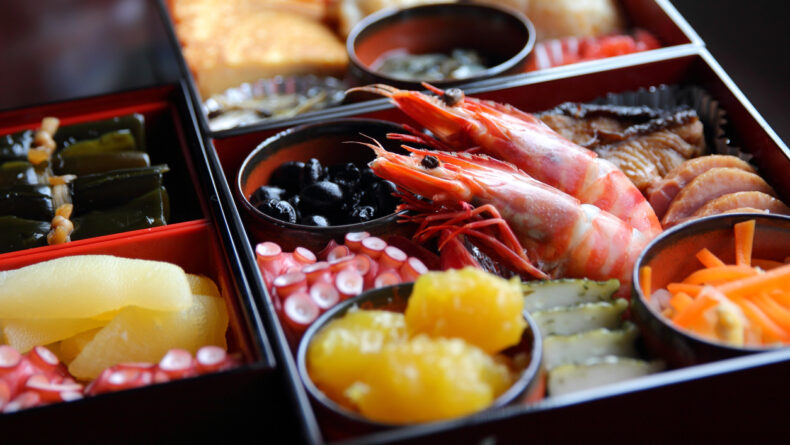
Osechi Ryori: The Hidden Meanings Behind Japanese New Year Food
They’re pretty, they’re delicious and they’re symbolic.

From Baths to Tea: 5 Ways to Use Yuzu to Survive Winter in Japan
In Japan, the citrus fruit yuzu brings a burst of brightness that cuts through the longest night of the year: the winter solstice.
By Rika Hoffman
5 Winter Vegetables To Buy in Japan This Season
Winter doesn’t have to mean meat and potatoes! Get to know Japan’s delicious seasonal vegetable picks for the chilliest time of year.
Leave a Reply