Furoshiki: Japan’s Eco-Friendly Cloth Wrapping We Should All Be Using
The folding technique that promotes zero waste

A piece of traditional Japanese history is being rediscovered as an eco-friendly method of gift wrapping and carrying goods.
Furoshiki is the Japanese art of aesthetically folding square-shaped material for practical purposes, such as gift wrapping, transporting daily items or even decoration. Incorporating traditional Japanese history into gift-giving celebrations has elevated the art of present wrapping while reducing our carbon footprint. Furoshiki refers to both the method and the cloth itself. In this age of eco-friendly living, reusable cloth has been given a new lease of life, as many people are seeing the environmental benefits.
The sustainability of furoshiki is extended into gift-giving. In this social protocol, the recipient unwraps the present and then returns the cloth to the sender, allowing for future reuse.
Gift-giving is a love language, and putting thought and effort into the way it’s presented is an extension of that care. The consideration in choosing colors and patterns that the receiver likes, along with choosing the way the material is lovingly folded, demonstrates that thoughtfulness. Furoshiki is a true representation of the attention to detail that is prevalent in Japanese culture.
The History Of Furoshiki
 © Photo by iStock: west
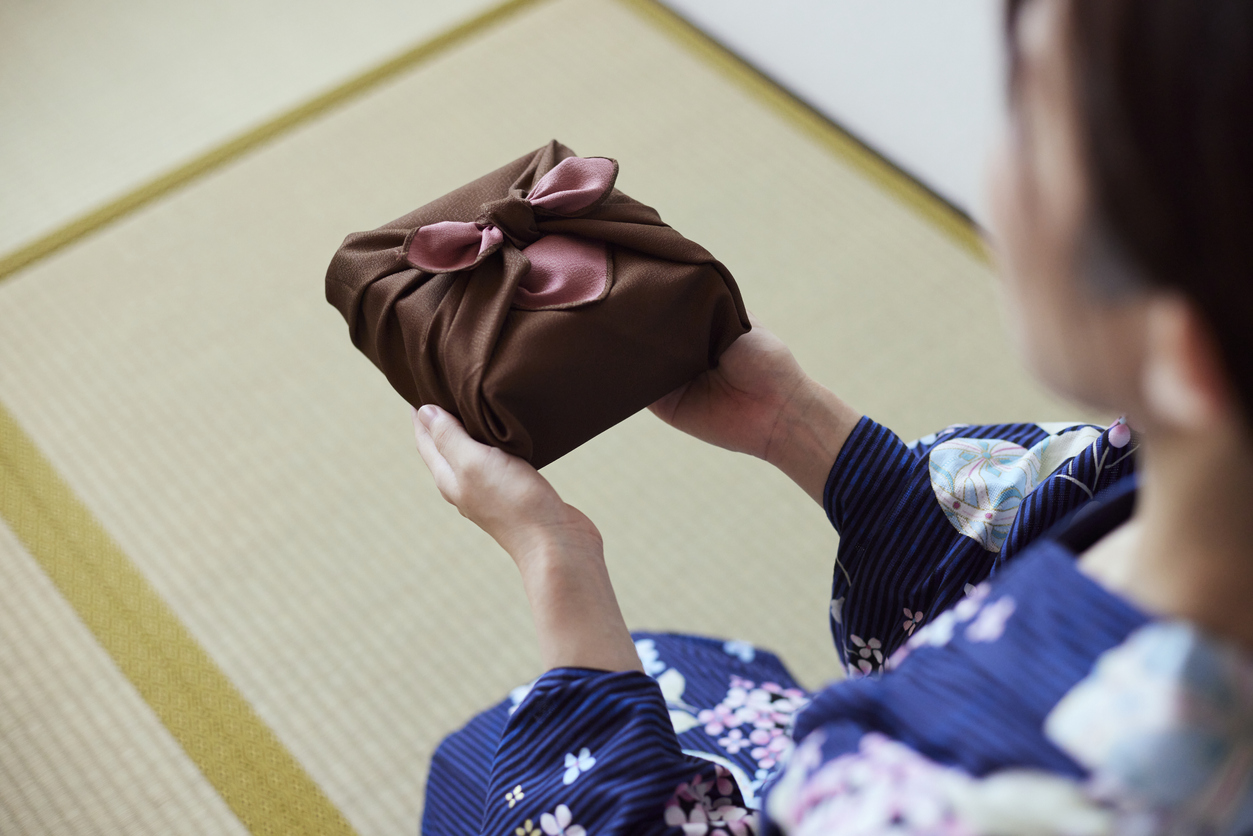
Today’s beloved furoshiki was given its name around 600 years ago, during the Muromachi period. A Shogun named Yoshimitsu Ashikaga created a large bathhouse in his Kyoto residence and invited many other high-ranking lords to visit. To ensure the lords didn’t confuse their belongings, they would wrap their kimonos and personal items in furoshiki (furo 風呂, bath, and shiki 敷, spread), usually emblazoned with their family crest. It was also common to spread the material across the floor to stand on while getting dressed.
It wasn’t long before furoshiki rippled out to the public, sparking a new trend for transporting goods. From carrying shopping to elaborately wrapped sake bottles, these square wraps became a household necessity.
Furoshiki Today
Furoshiki is still commonly used to carry bento boxes to school and to hanami (cherry blossom viewing parties). It’s loved by gift-givers as a personal touch to elevate the craft of wrapping.
Choosing The Right One
 © Photo by iStock: kuremo
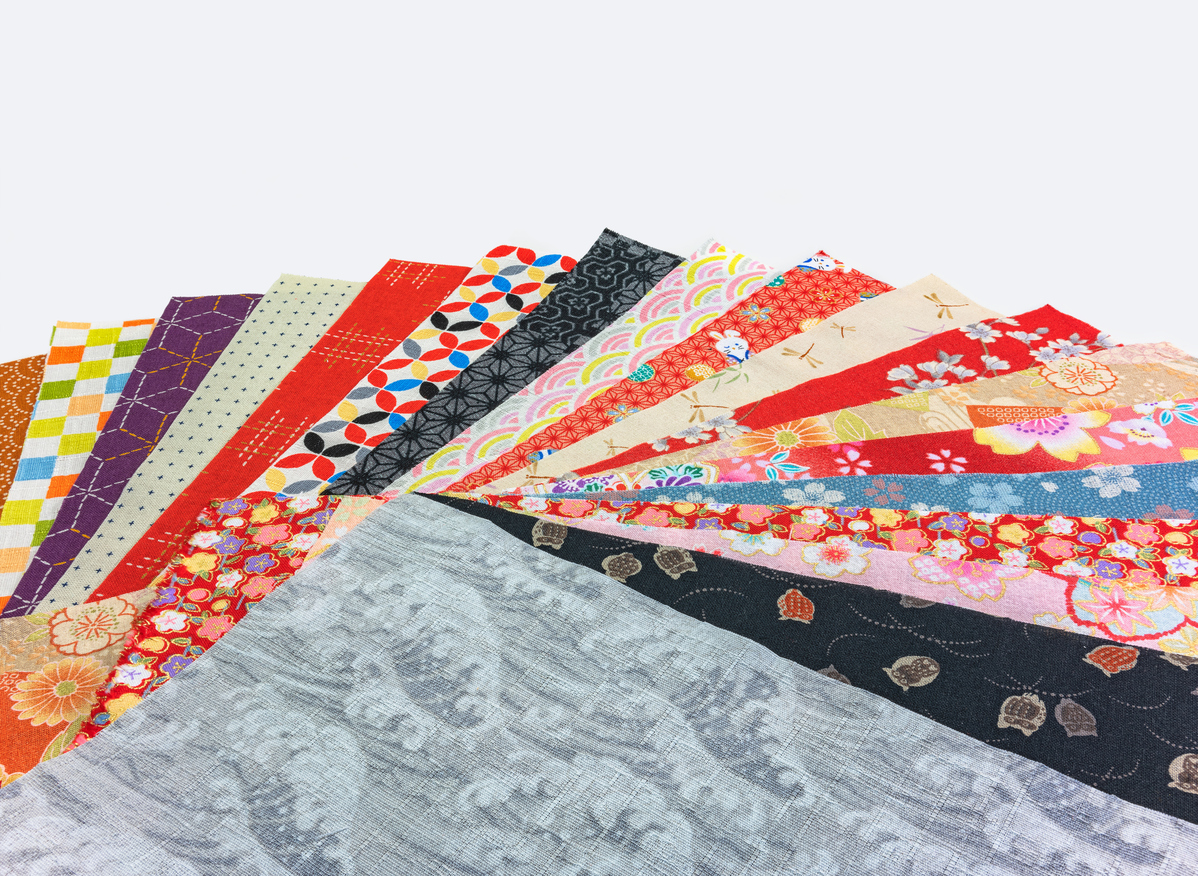
Traditionally, the colors chosen reflected the occasion for which they were used. Warm colors, such as reds and oranges, were used for celebrations such as weddings and birthdays. Darker colors were used for more somber events like funerals.
Seasonal Influence
Like with many things across Japan, the four seasons have a great influence on patterns and designs. Furoshiki can be embellished with bursts of cherry blossom for spring and clusters of maple leaves for autumn. Animal patterns, especially fabrics featuring the zodiac animals, are also popular choices for those wishing to invite luck. 2025 is the year of the snake, so keep your eyes peeled for slithering snake-adorned furoshiki!
What Material Is Furoshiki Made Of?
Japanese furoshiki can be made from various materials best suited to its intended use. Popular materials include silk, cotton, nylon, and polyester. Silk should be saved for expensive gifts or very special occasions, whereas cotton is preferred as a more durable and affordable alternative.
Furoshiki is usually hemmed to be more aesthetic, as well as to strengthen the fabric. Take care not to confuse furoshiki with tengui. Tengui (te 手, hand, and nugu 拭, wipe) is made from thin cotton, and its main purpose is for wiping hands or dabbing sweat. The edges are not usually hemmed, as it’s just for personal use.
How To Fold Furoshiki
 © Photo by iStock: Ababsolutum
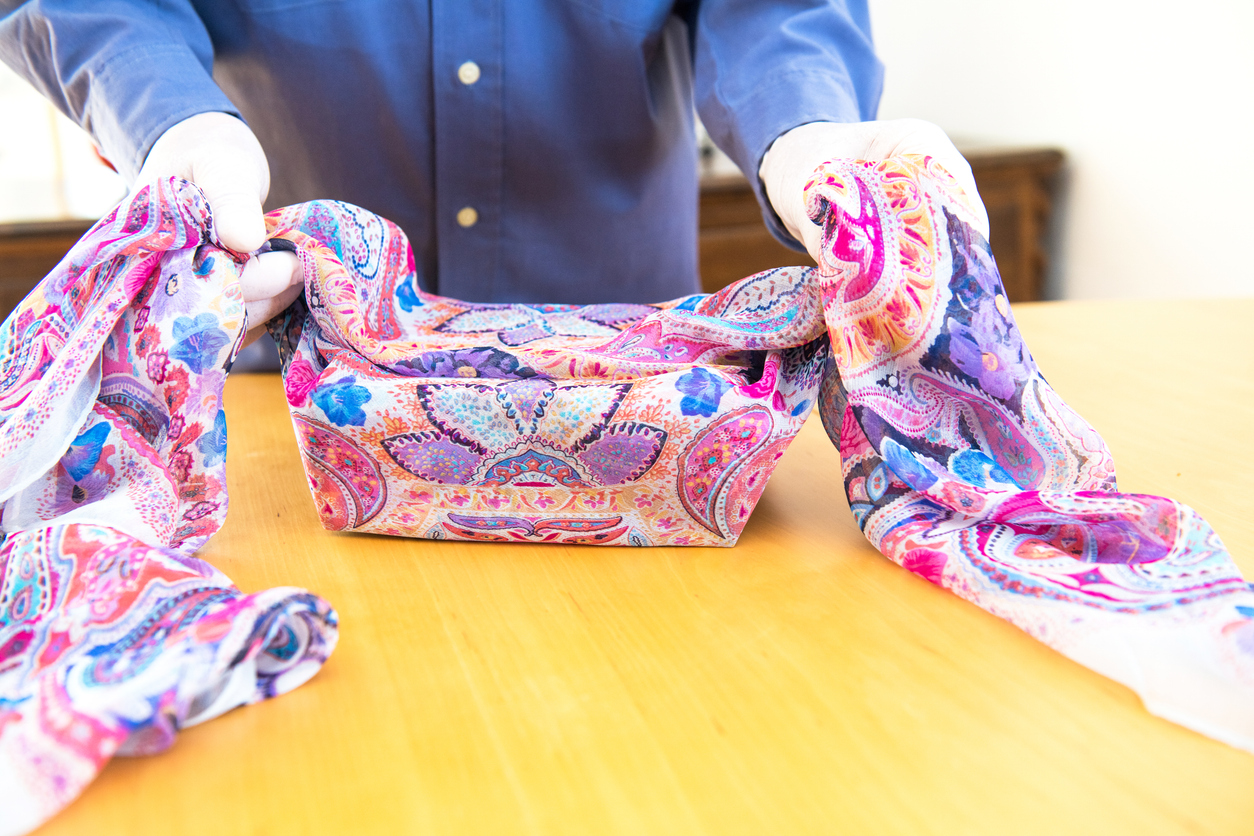
There are multiple ways furoshiki can be folded, depending on the gift and situation. One of the beauties of furoshiki is how customizable it is. The gift giver can choose the material, design and wrapping style—the possibilities are endless!
Below are a couple of wrapping techniques for beginners:
Otsukai-Tsutsumi
 © Photo by iStock: Yasuko Inoue
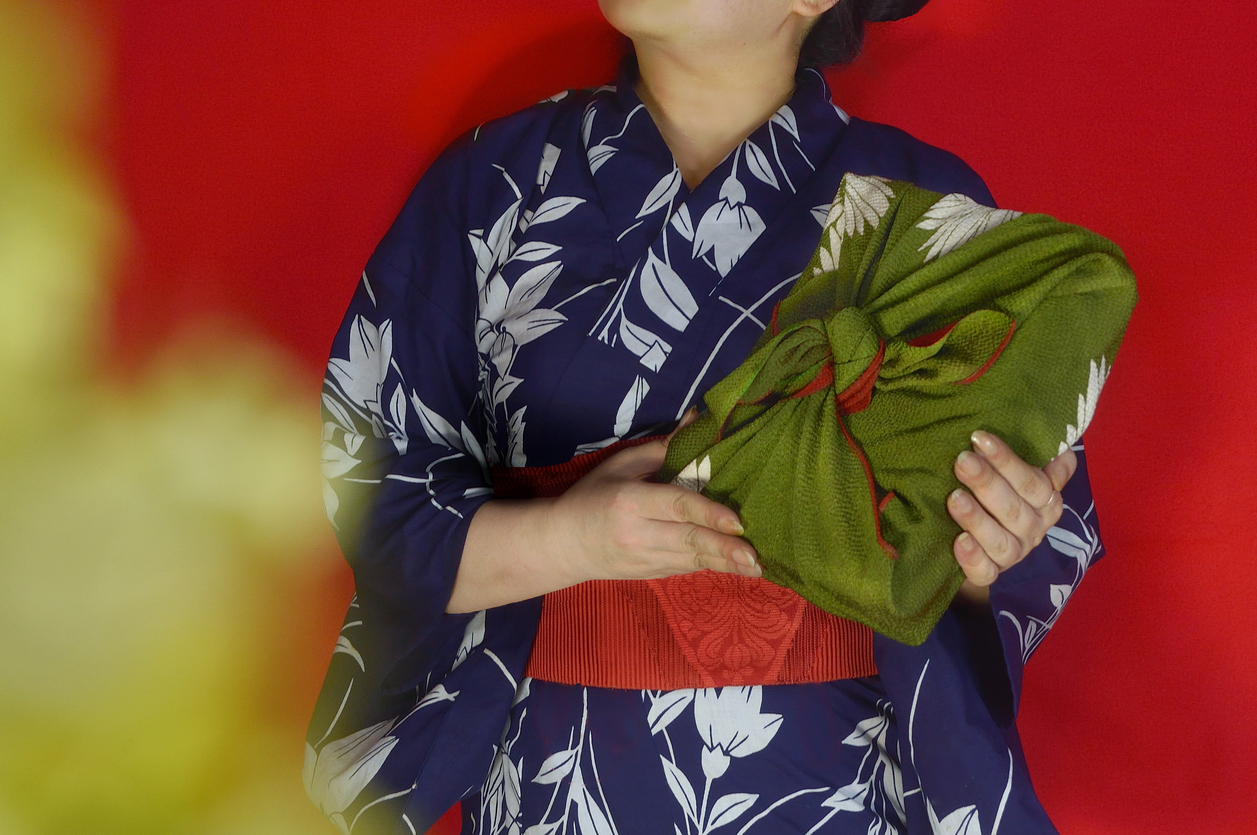
Otsukai-dutsumi is one of the most popular wrapping methods, its simple but chic form can be used for everyday items or to present a gift for a special occasion.
- Place the fabric down in a diamond shape, then place your box in the center of the square.
- Fold the bottom point up over the box and tuck it underneath. Bring the top corner of the fabric down over the box.
- Use the two side pieces to tie a simple knot, followed by another knot for security. Tease the fabric ties in a bow.
Bin-Tsutsumi
 © Photo by iStock: piotrmilewski
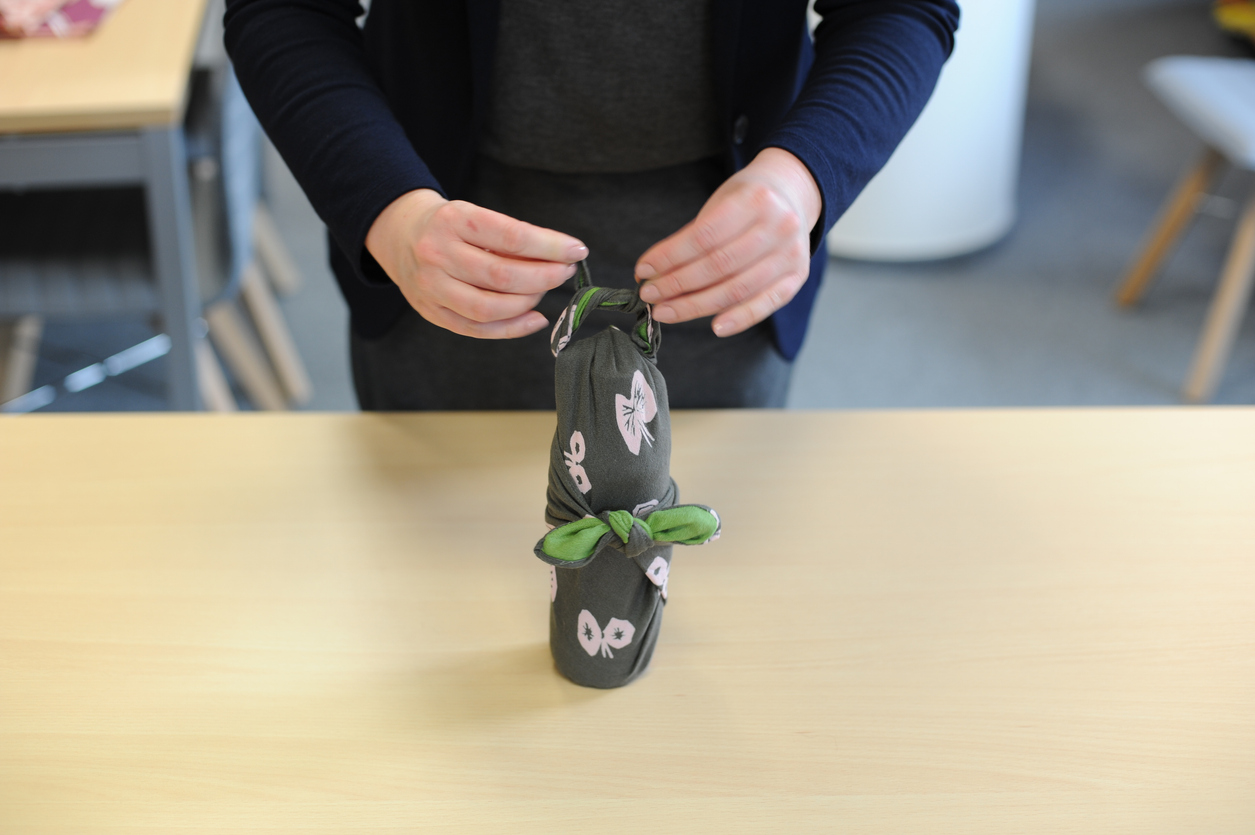
Bin-tsutsumi is best for wrapping bottles, particularly for gifts. Topped with an effortless-looking knot, your bottle is sure to be a crowd-pleaser!
- Place the fabric down in a diamond shape, then place your bottle upright in the center of the square.
- Pull two opposite corners of fabric over the top of the bottle, and tie in a knot.
- Hold the remaining two corners and wrap them around the bottle in opposite directions, and finish by tying them in a bow.
Where Can I Buy Furoshiki?
 © Photo by Musubi Furoshiki
Musubi
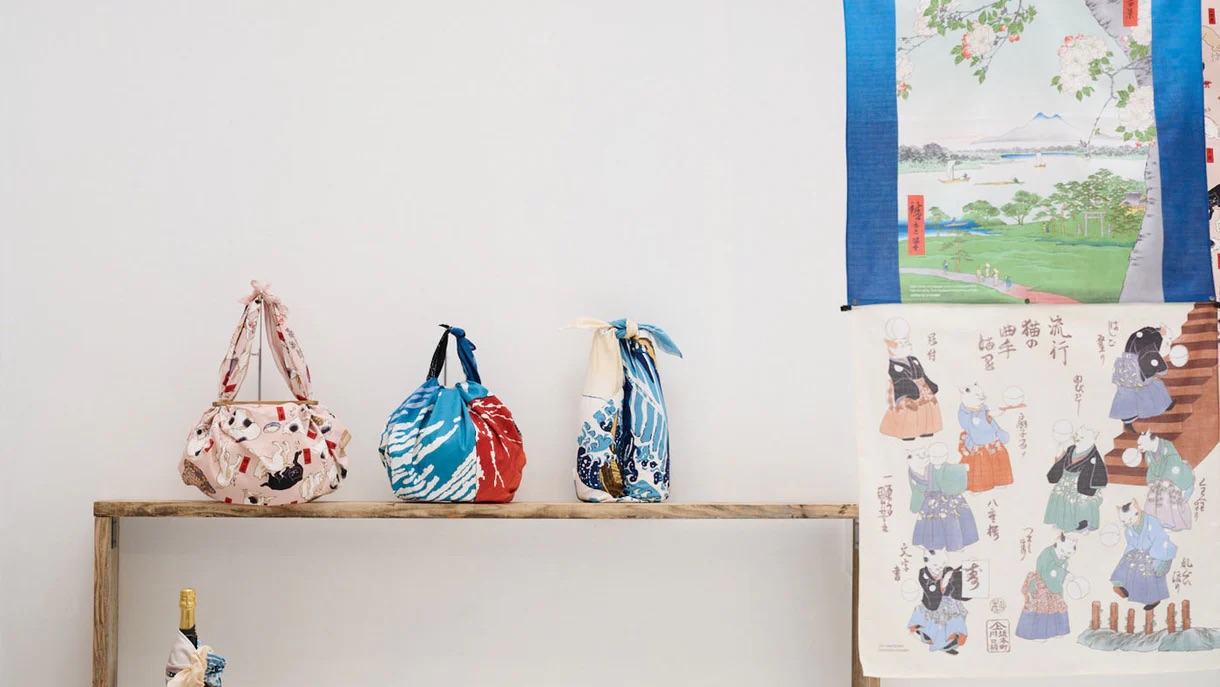
Musubi has over 500 different furoshiki made from a range of fabrics, including cotton, silk and linen. They often collaborate with contemporary artists to create unique designs. Musubi originated in Kyoto and now has a store in Jingumae.
- Address: 2-31-8 Jingumae, Shibuya-ku, Tokyo (Google Map Link)
Karakusaya
Karakusaya offers a wide range of furoshiki styles. You can find everything from traditional to modern designs. If you’re struggling to master your wrapping technique, Karakusaya holds workshops free of charge.
- Address: 3-4-6 Tomizawacho, Nihonbashi Ningyocho, Chuo-ku, Tokyo (Google Map Link)
Have you ever used furoshiki? Let us know about it in the comments below!









Related Articles You Might Like
5 Seasonal Spring Fish in Japan
Whether prepared in washoku (Japanese style) or youshoku (Western style), the five fish below are the best spring has to offer. Read on for more...
Easy Bento Making For Newbies
Never made a bento before? Afraid you might not cut it in the lunchtime world of avocado flowers and Hello Kitty sushi rolls? Good news....
By Anisa Kazemi
Kaga Yuzen: Experiencing a Traditional Silk Dyeing Technique in Kanazawa
This traditional form of art is breathtakingly beautiful!
Recipe: Amazake Purin For The Japanese New Year
The classic Japanese custard pudding gets a seasonal twist with amazake.
By Rika Hoffman
Leave a Reply