Recycling Clothes in Tokyo
Clean out your closet and start the year fresh!

Here are a few ways to make some space and keep your used clothes out of the incinerator.
Until relatively recently, used clothes in Japan have had one fate: burnable garbage. If you’re from a country with a collection bin and a few secondhand shops in every neighborhood, this just feels wrong. Some people take suitcases full of cast-offs back home rather than throw them out. Happily, the Japanese concept of mottainai (avoiding wastefulness) is catching on and leading to more options for recycling your clothes in Tokyo.
Sell It!
 © Photo by iStock: CrispyPork
Do you have too many designer clothes and accessories in like-new condition? You’re in the right city. Many brand-conscious secondhand shops will buy your things.
Komehyo Or RagTag
Start with Komehyo or RagTag, both of which have about a half-dozen outlets throughout Tokyo. Be prepared to take a number and wait a while if you go on a busy day, but if you can read Japanese, RagTag has an excellent online option. You can send in a box of clothes free of delivery charges, and you’ll get an email within a week or two telling you how much the store is willing to offer you for them. If you accept the price, a deposit will be made to your bank account, and if there are any items whose prices you disagree with, they’ll send them back to you at no charge.
Pass The Baton
Pass The Baton in Omotesando sells items that fit its quirky aesthetic on consignment (they call it “relighting”). Still, the store requires an appointment for anyone wishing to sell items, during which you’ll have to explain the “story” of each piece. Expect to spend at least an hour with a staff member, even for a small number of items, but you’re likely to get more cash for designer clothing and accessories that sell than you would from RagTag or Komehyo.
Mercari (メルカリ)
The fastest growing app in Japan (also available in the U.K. and the U.S.), Mercari lets you sell and buy pretty much anything. To use it, you’ll need to make a (free) account and have a good command of Japanese, although it’s fairly easy if you have a friend to help you do it. Take up to four photos, upload them along with a short description and wait for someone to buy it. Clothes and small items typically sell within a few hours. After someone buys it, you will have to wrap the product yourself and send it to the user who purchased it.
Logistics company Kuroneko Yamato has a partnership with Mercari, which allows you to drop by any Yamato store and whisper the magic words “Mercari.” They’ll have your goods delivered in a special package. The best thing is that it’s anonymous, so neither the sender nor receiver knows the other party’s private information (unless they’re sending it in another way). Mercari takes 10% of every deal, so make sure to set the price in a way that gives you some profit.
Other popular online selling options in Japan include:
- Rakuma (楽天ラクマ): This one is a major competitor to Mercari, with lower selling fees (just 6.6%) and strong integration with Rakuten’s point system—perfect if you already shop in the Rakuten ecosystem or have a Rakuten card/account.
- Yahoo! Auctions (ヤフオク): Japan’s original online marketplace. It’s great if you want to set up a bidding war on higher-value items.
- Yahoo! Flea Market (Yahoo!フリマ)/PayPay Flea Market (PayPayフリマ): Linked to PayPay’s cashless system, this app, now combined with Yahoo!, makes selling and buying easy with direct digital payments. It also has frequent discount campaigns, so it might be the best deal if you already use PayPay or have an account.
- Facebook Marketplace: It’s not as popular for locals, but it’s suitable for quick local sales and exchanges with other expats. It’s pretty convenient for larger items like furniture or appliances, but just watch out for any scams and make sure all deals are clear before proceeding.
Recycle It!
 © Photo by iStock: Cunaplus_M.Faba
Uniqlo
Uniqlo’s recycling program works with international humanitarian partners to donate used Uniqlo clothes to refugees and other displaced people. What they take is specific, but if you’ve ever gone on a summer sale binge and bought enough cooling t-shirts to outfit a tropical party, it’s good to know there’s a place where it won’t all go to waste. Simply bring your things to any Uniqlo shop.
H&M
H&M will give you a ¥500 store coupon for every bag of clothes you donate. The staff will send clothes in good shape to markets to be resold and then recycle the rest as raw materials, but they won’t take shoes or accessories. There’s a limit of two bags per person per day. There is no explicit limit to the size of the bags, but the cardboard deposit boxes set up at the cash registers suggest they expect donations to be on the smaller side.
Donate It!
 © Photo by iStock: Marizza
Salvation Army
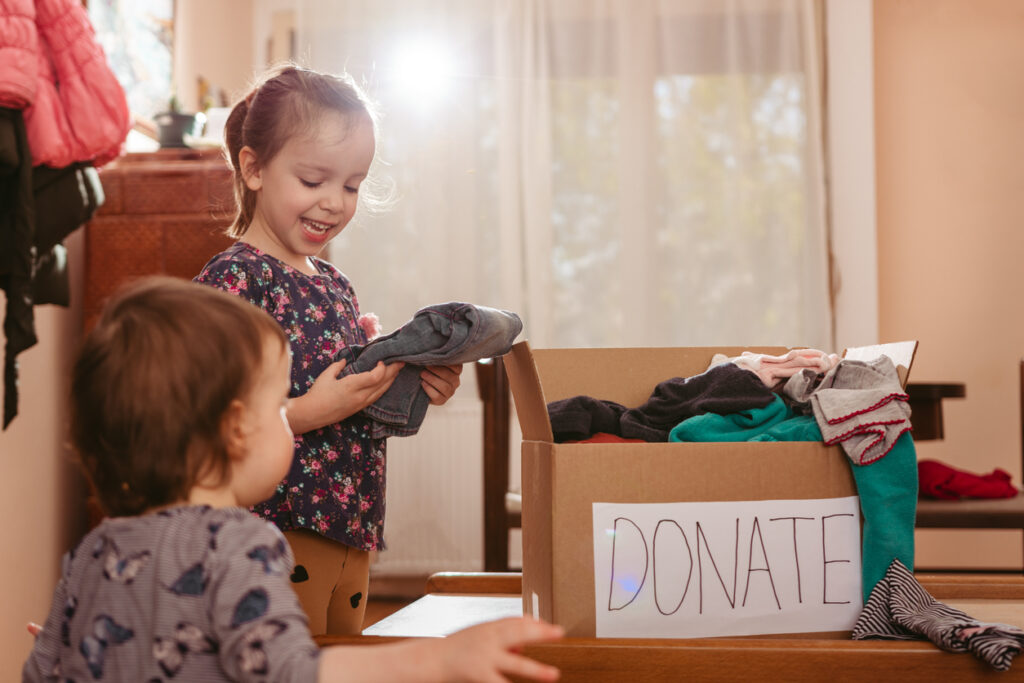
The Salvation Army will not only take your used wearable clothes in bulk but also send someone to your door to cart them away for free. The catch? They only make pickups during the week, and you may have to schedule as much as two or three weeks in advance. You can contact them via telephone: 03-5860-2992 to organise your donation.
There is a little-known Salvation Army store open on Saturday mornings in Nakano-Fujimicho. It offers serious bargains on housewares, English books, and—yep—clothes. It’s a great place to start refilling all that new empty space. If you don’t schedule a pickup far enough in advance, the store will accept donations of some items via courier (although you must pay the delivery charges).
HELP (House in Emergency of Love and Peace)
HELP offers a safe place for women and children escaping abuse. Many come with almost nothing, so they’re always looking for clean, modest women’s and kids’ clothes. Everyday wear, seasonal coats and shoes are especially useful. Just make sure items are freshly washed and in good shape, or consider whether you’d be happy to wear them yourself.
If you would like to donate to their cause in general, food (within the expiration day), rice, snacks for children, new toys and stationery, new pajamas, new underwear and detergent are always urgently needed. You can contact them via telephone: 03-3368-8855 to organise your donation.
Sanyukai (山友会)
Sanyukai supports people experiencing homelessness in Tokyo’s San’ya area. Their biggest need is practical men’s clothing like T-shirts, jeans, jackets, socks and shoes. Durable and comfortable items work best since they’re handed out directly through outreach. Wash everything before donating, and avoid anything too worn-out. Warm coats and sturdy shoes are especially welcome in winter!
We recommend this one for men with clothes to donate or those with male friends/partners who are in good need of a closet cleanout. Contact them via telephone: 03-3874-1269 or email: info@sanyukai.or.jp to organise your donation.
Japan Relief Clothing Center (JRCC)
JRCC takes good-quality clothing for all ages and gets it to those in need, from disaster survivors in Japan to refugees overseas. Like the others, they don’t accept damaged or overly worn items, so keep donations clean, neat and wearable. Everyday pieces, lightweight items and seasonal outerwear are all useful.
Send a cardboard box or paperbag full of clothes to their warehouse in Kobe: Japan Relief Clothing Center, 22-2, Fukaehama Machi, Higashinada-Ku, Kobe, Hyogo 658-0023 (Tel: 078-441-2641)
You could also try testing your sewing skills by turning your old clothes into small items like pouches and masks.
How do you go about recycling your clothes in Tokyo? Let us know in the comments below!
Comments
Leave a Reply









Related Articles You Might Like

Leaving Tokyo: Where To Donate And Sell Your Furniture
Whether you’re returning home or just swapping cities, one thing is for certain: the more you own, the more you’ll have to lug with you....


Hay Fever in Japan: 10 Products To Help You Fight It
Temperatures are slowly but surely rising, flowers are blooming and we'll soon be trading our winter clothes for lighter jackets to welcome the most beautiful...

3 Things To Do If You Feel Totally Stressed Out
You've got rid of everything (everyone) that gets you down, but still don’t quite feel right…
By Hilary Keyes