Surviving A Tokyo Micro-Apartment Is Possible (If You Get Creative)
Helpful Tips & Tricks for Tiny Living in the Big City

Tokyo is the biggest city in the world. Makes sense for it to have the teeniest apartments, right?
When I tell my friends and family back home that the Tokyo micro-apartment my boyfriend and I share is 21 square meters, one room and only has a single-burner stovetop, I invariably see the same expression of alarm dawn on their faces.
That horror, though, is nothing compared to the look I get when I tell them how much it costs.
Those who are used to the exorbitant prices of apartment living in New York City or Hong Kong will not find Tokyo’s housing market shocking. However, to the rest of us, it can be a bit of a surprise. Space is a coveted luxury in Tokyo, and for those of us not fond of share houses, the trade-off is living in a space so small you swear you made dioramas bigger when you were a child.
To help you survive your transition into tiny living, here are seven essential tips.
1. Choose An Apartment That Feels Larger

Not all micro-apartments are created equal. Some are designed more intelligently than others. Many Tokyo micro-apartments are standard studios: sleeping, kitchen and living space are all within a few centimeters of each other. Otherwise, micro-apartments are generally classified as 1K (one bedroom/living space plus a kitchen), as in the image above.
But not all 1Ks are the same. For example, my microapartment is technically one room but the inclusion of a loft means that it feels like two. When searching for your apartment, look for big windows, high ceilings, and light-colored walls—these elements will help the space feel bigger than it is.
Some micro-apartments don’t have spaces for washing machines, so if you value your personal comfort and sanity, try to choose one that does. And be mindful of storage. Your belongings have to go somewhere, so make sure your new home has sizable wardrobes, a genkan (entrance) closet, and/or oshiire (closets traditionally used for futons and bedding).
2. Get Smart With Your Furniture

Big, bulky items will only take up space and make your apartment feel smaller. Choose versatile furniture that can be packed away. Rather than having a dinner table and a desk, combine the two.
Nitori sells a range of cheap but chic foldaway tables that can be pulled out when needed. Instead of having huge dining chairs, grab a couple of zaisu (floor chairs without arms or legs), which are much smaller and easier to stow when not in use.
Ditch the Western-style bed and invest in a comfy futon. They can be folded away when not in use, making them perfect for tiny apartments. Shikibuton (mattress) and kakebuton (duvet) sets can cost anywhere from ¥5,000 to ¥30,000 and can be bought from large supermarkets, Nitori or independent sellers.
3. Maximize Your Storage By Getting Creative
 © Photo by iStock: Dimensions
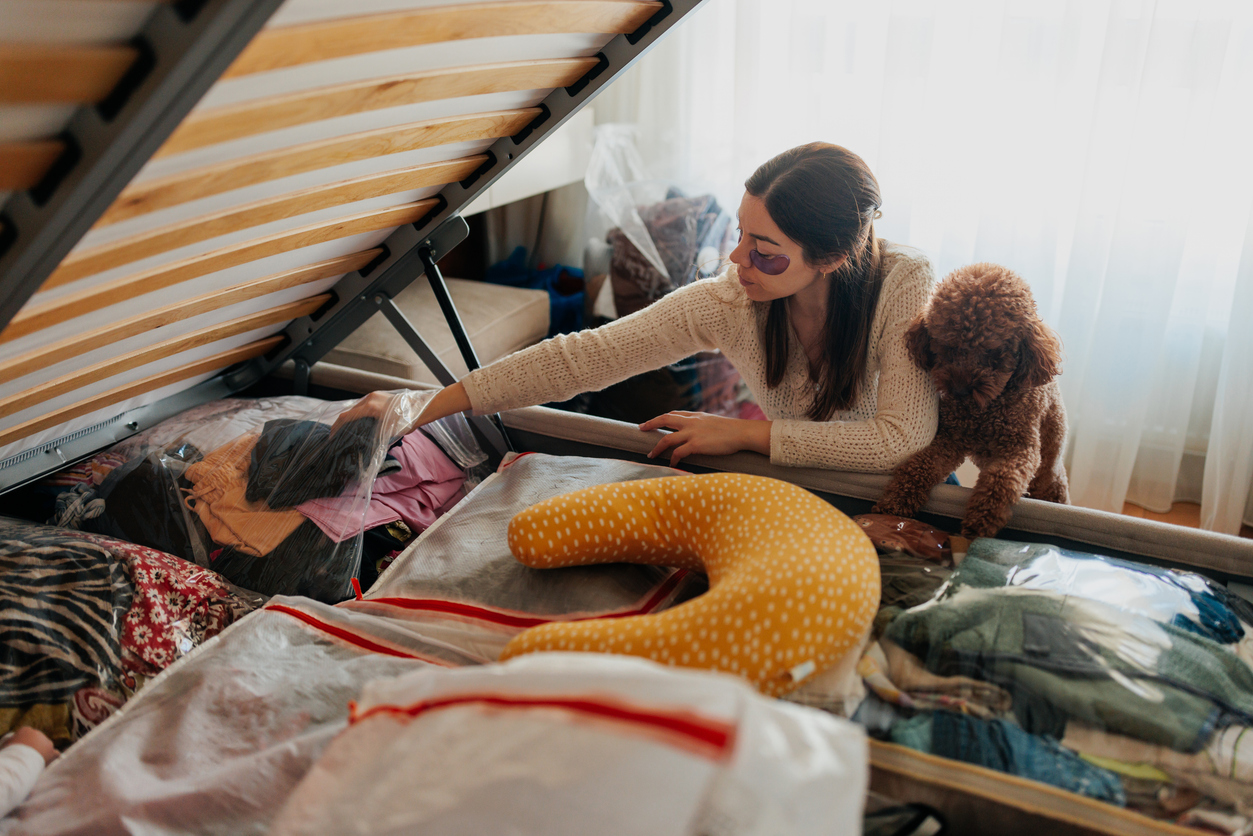
In a tiny apartment, creative storage is your best friend. The 100-yen shop and places like Don Quijote sell plenty of plastic dividers, hanging hooks, storage boxes, and the like, to help you maximize space.
Try stacking your plates sideways, stick hooks and racks onto the backs of cupboard doors for utensils and kitchen gadgets, and invest in racks to hang over your stove for spices and condiments.
The genkan can be a fantastic but often overlooked space to hang household goods. You can even pick up storage shelves from Ikea, which are designed to sit over your toilet and provide you with additional space you would have never otherwise had.
4. Decoration Is Key
 © Photo by Tokyo micro-apartment
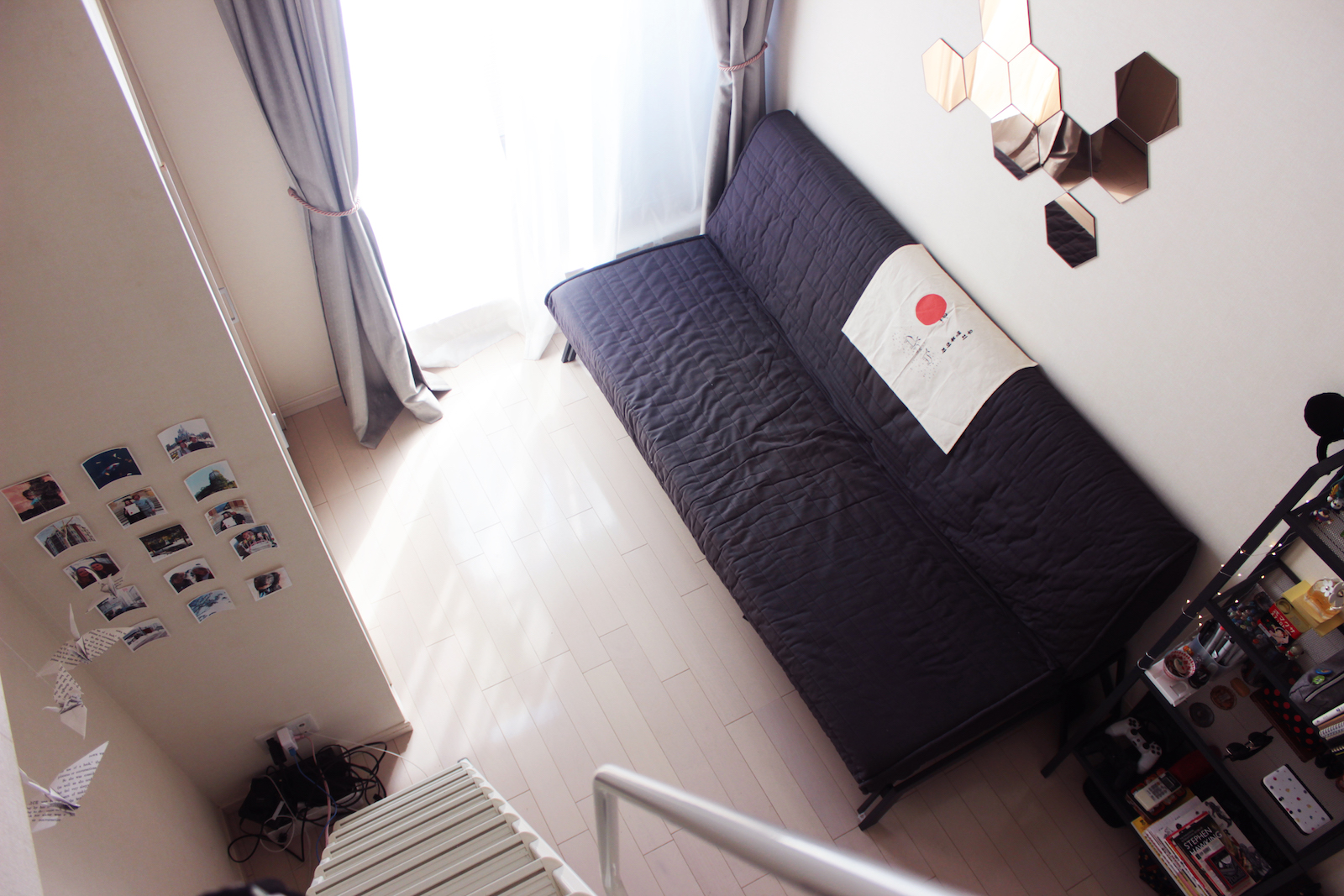
One of the most important steps to making a tiny space feel homely is adding a little personality. Now, ‘decorating’ doesn’t have to automatically mean expensive. To make my apartment appear brighter, I bought some colorful washi tape from Loft, printed a heap of photos at Bic Camera, and stuck up some postcards and art prints. This only costs a few hundred yen to do, but it instantly makes the space more cheerful.
Investing in mirrors is also a great way to make a small space feel larger.

When styling your apartment, pick pieces that are neutral colors (like beige, light grey or cream) as these won’t draw the eye or make the space look busy and cluttered. Pick a bright and cheerful pattern for your duvet and pillows.
Also, if you have a Western-style bed, push it up against the wall instead of having it in the center of the room to give you more floor space. As a bonus, use the space underneath as additional storage.
5. Use Your Balcony
 © Photo by Elizabeth Sok
The balcony is often an ignored space in a Tokyo micro-apartment. Relegated to holding laundry, we sometimes overlook the potential of these petite outside rooms. If your balcony is big enough, there’s no reason you can’t invest in a pint-sized outdoor chair and some pretty plants.
Beautify your balcony to make the space your sanctuary, perfect for reading on sunny mornings or chilling on an evening off and watching the Tokyo sunset.
6. Be Aware That The Walls Are Thin
 © Photo by iStock: Yta23
In Japan, walls are thin and insulation is a faraway fantasy creation that no one has ever heard of. Especially in wooden buildings: Everyone. Can. Hear. Everything. If your favorite thing in the world is blasting J-pop at three in the morning, it might be time to invest in some headphones, lest your neighbors get thoroughly ticked off and have you kicked out of the building.
It’s very important to be considerate of others, especially within the domestic space. This is why you often see people practicing music and instruments in Yoyogi or Ueno Park. So, remember to be mindful of noise: don’t run your washing machine too late, don’t stomp up your stairs, don’t have loud parties.
Also, make sure you observe building rules, such as putting out trash correctly or not smoking on your balcony. Hostile neighbor relations can lead to hostile living environments, which is exactly the type of thing that will make tiny living less comfortable.
7. Clean Regularly
As trivial as it sounds, being a regular clean freak will help you feel more comfortable in your tiny apartment. One of the benefits of living in a micro-apartment is that it takes no time at all to clean. The downside is—because the space is so small—they get dirty really quickly, too.
A little bit of cleaning every day goes a long way, and Japan has plenty of cleaning products to make it more fun. Why not pick up some microfiber cleaning slippers or a pack of quirky, octopus-shaped sponges to make your chores more cheerful? And for lazy people, Japan has a variety of low-effort products that keep your home clean, which are worth checking out.
What are your tips for surviving a Tokyo micro-apartment? Share in the comments below.
Comments
Leave a Reply






Related Articles You Might Like

10 Surprising Things You Can Rent in Japan
If there’s one thing Japan does exceptionally well, it’s making life both more convenient and more quirky.
By Amy Ellis

Jiko Bukken: Would You Live In A Stigmatized Property?
Cheap housing in Japan can come with eerie implications.
By Hilary Keyes

A Crash Course In The Japanese Home And Kitchen
The depth of Japanese homes and kitchens goes beyond their limited space.
By Fiona Uyema

10 Genius Kitchen Goods From Japan Everyone Should Own
Bring the best of Japan's creativity and sanitation into your home.
I agreed that balcony is an unused space except for clothes hanging. You can create your own sanctuary to relax, it’s an extension of indoor space. Where is the good area to look for a micro apartment in Tokyo? TKS!