Soba: An Introduction to Japanese Buckwheat Noodles
Traditional Japanese Flavors

Soba noodles; a delicious, healthy alternative to ramen.
A relatively easy-to-make dish, 蕎麦/そば (soba; “buckwheat”) noodles are one of the most famous traditional foods in Japan. Archaeological evidence shows that buckwheat has been cultivated in Japan since the Jomon Period (about 10,000 years ago).
What Are Soba Noodles?
 © Photo by iStock: joka2000
In the simplest terms, soba is made from finely ground buckwheat mixed with water into a dough, cut into long, thin noodles, then boiled. It’s essentially the same process as making pasta. Soba is then served with tsuyu (つゆ), a soup base made from dried bonito and kombu kelp dashi (stock) and soy sauce, and other toppings or condiments. The most common soba dish condiments are spices such as ichimi togarashi (hot chili pepper), shichimi (seven spice pepper blend), wasabi and green onions.
Don’t Forget To Try The Soba-yu
At some restaurants, you may be given a bowl or teapot of soba-yu after your meal. Soba-yu is the water the noodles were cooked in and contains the same vitamins and minerals as the noodles themselves. It doesn’t have much flavor, but it is nice on a cold winter’s day, or to add to your remaining tsuyu if you wish to drink that as well.
The Health Benefits Of Soba Noodles

The average serving of soba noodles is 250-400 kcal and is known for its vitamins B1 and B2, rutin and dietary fiber content. Compared to udon noodles and ramen, it also has a relatively low glycemic index (GI) level, so it’s a safe alternative for dieters. As long as you get soba noodles with a high buckwheat flour ratio (more on this below), they also contain very little to no gluten, which makes them a good alternative for those with coeliac disease. That being said, soba dishes may also be high in sodium, so if you need to watch your salt intake, you may want to plan your other meals accordingly.
Watch Out For Potential Buckwheat Allergies
One concern that some may have about eating soba is having buckwheat allergies. While rare, they do happen and can be fatal. Individuals from countries where buckwheat is uncommon or those with allergies to rhubarb and garden sorrel should be especially careful.
Symptoms of a soba allergy start almost immediately after eating the noodles and can range in severity. Anaphylactic shock and death are obviously the most severe. Other symptoms include a burning or stinging sensation in the mouth, itching on the lips and in the mouth, and swelling of the lips, tongue and throat. Later-onset symptoms may include stomach pain, nausea, vomiting and diarrhea.
Don’t Forget To Check The Buckwheat Ratio When Buying
For those with allergies or sensitivities, it’s also important to understand that not all soba noodles contain the same amount of buckwheat. Many dried soba noodles sold in supermarkets use varying ratios of buckwheat and wheat flour, which can influence both the flavor and potential allergen exposure. Here are some of the most common types:
- Juwari Soba (十割そば): 100% buckwheat; gluten-free and the most traditional, but also the most brittle and aromatic. Avoid mixing them up too much when boiling, as they may fall apart.
- Hachiwari Soba (八割そば): 80% buckwheat, 20% wheat flour; a common compromise between flavor and texture.
- Rokuwari Soba (六割そば): 60% buckwheat, 40% wheat; smoother texture and easier to cook at home.
- Generic Soba: Some supermarket brands may contain only 30–40% buckwheat, often labeled simply as “soba” without a clear ratio. These aren’t necessarily bad and taste just fine, but they definitely won’t contain the same amount of buckwheat health benefits as the ratios above.
The Three Basic Forms of Soba Noodles
Soba noodles can be served in one of two ways: hot or cold.
Kake Soba (かけそば)
 © Photo by iStock: akiyoko
Kake soba is soba served in a hot tsuyu broth with various toppings as well as the condiments mentioned above. You can choose to drink the broth (directly from the bowl) if you like or leave it aside if you are concerned about salt intake.
Zaru Soba (ざるそば)
 © Photo by iStock: masa44
Zaru soba is a plate of cold soba noodles served with a small cup or bowl of cold tsuyu dipping sauce on the side, along with chopped green onions and wasabi. It’s most often served with sliced nori seaweed on top (known as mori soba). Add whatever condiments you like to the tsuyu, then simply pick up a mouthful’s worth of noodles, dip them in the tsuyu, and enjoy.
Hiyashi Soba (冷やしそば)
 © Photo by iStock: piyato
Hiyashi soba is a bowl of cold soba noodles topped with various condiments. Essentially, you add whatever condiments/toppings you like to a bowl of cold noodles, pour over some cold tsuyu, and stir before slurping up your dish.
The Most Common Types of Soba Noodles
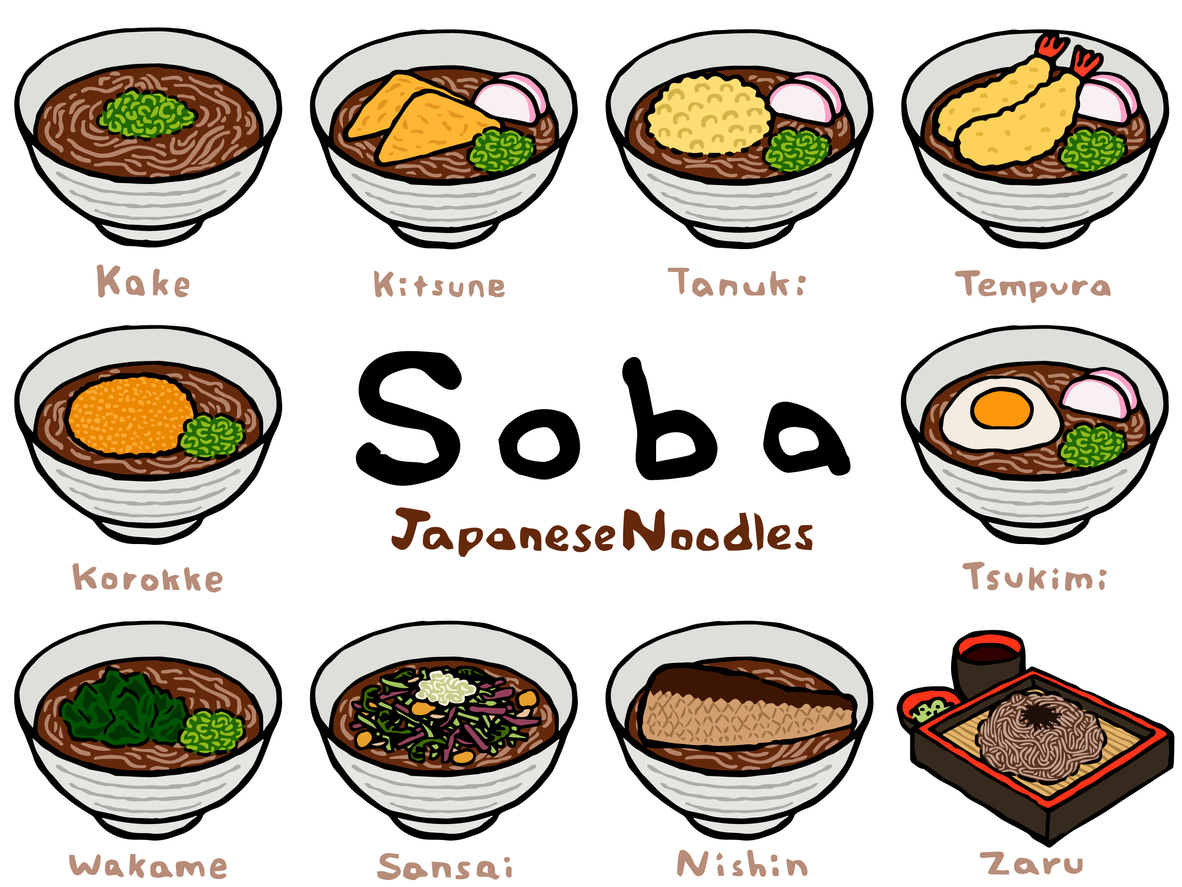 © Photo by iStock: katoten
While not an exhaustive list, these are the most common types of soba dishes available across Japan.
Kitsune Soba
Kake soba with slices or sheets of sweet fried tofu in the broth. According to Japanese folklore, kitsune (foxes) love fried tofu, and this inspired the name.
Tanuki Soba
Kake soba with tenkasu (crumbs of fried tempura batter) in it. One theory is that, as tanuki soba is relatively topping-free, the original name was tanenuki (タネ抜き) or ‘without toppings’ and eventually was shortened to tanuki.
Kakiage/Tempura Soba
Kake soba with a kakiage tempura cake on top. Kakiage is composed of finely chopped onions, carrots, cabbage and other vegetables but may also contain shrimp, squid, octopus or other types of seafood. Tempura soba is simply hot or cold soba with tempura in it or on the side.
Korokke Soba
Kake soba topped with a korokke (potato croquette).
Kamo Soba
Kake soba with slices of duck meat and green onions.
Nishin Soba
Kake soba with dried sliced herring on top; there are two famous regional varieties from Hokkaido (where herring is a staple) and Kyoto (preserved sweetened and boiled herring is used).
Okame Soba
Kake soba with kamaboko (fish cake), spinach and seasonal vegetables or mushrooms.
Tamago-toji Soba
Kake soba with a soft-scrambled egg in the broth.
Toshikoshi Soba
Kake soba served on New Year’s Eve with especially long noodles and tempura shrimp. The long noodles and the shrimp are said to represent longevity/long life and are auspicious items to have for the coming year.
Nameko Soba

This dish is named after the nameko mushroom which has a gelatinous outer skin. This gives them a slick texture that people either love or hate. Anyone with issues regarding food textures may want to avoid this dish or nameko in particular.
Oroshi/Tororo Soba
Any type of soba served with either daikon-oroshi (grated daikon radish) or grated yamaimo/nagaimo (Japanese/Chinese yam).
Sansai Soba
A soba dish with a variety of edible plants known as sansai; these include zenmai (fiddlehead fern) or takenoko (bamboo root). While these plants are edible, they may also be allergens so please be careful.
Tsukimi Soba
Kake or hiyashi soba served with either a fully raw or soft-boiled egg on top. Unlike tamago-toji soba, this egg is cooked separately and placed on top of the dish.
Curry Soba
It features a slightly thicker tsuyu broth base containing Japanese curry powder. Depending on the chain, it can be mild to very spicy.
When a dish has been around for several thousand years, people and areas find new and unique ways of presenting it. One of the best ways to try soba is to find a small, traditional soba or noodle shop in your neighborhood and test their wares yourself!
How do you like your soba noodles served? Let us know your favorite in the comments!








Related Articles You Might Like
Food Allergies in Japan: A Quick Guide To Know & Understand Them
Use this guide to make food shopping safer for those with allergies.
By Hilary Keyes

Start The New Year With This Healthy Chicken Soba Noodle Salad
One for your 'get healthier' new year's resolutions!
By Luisa Heenan

Matcha: The Ultimate Guide With Benefits & Best Places to Try in Tokyo
One matcha cup a day may keep the doctor away.
By Luisa Heenan

Japanese Superfoods: Shichimi
This little powder not only packs a punch in the spiciness department, but is on fire in the nutritional stakes, too!
By Luisa Heenan
Leave a Reply