Buying Baking Ingredients in Japan: A Beginner’s Guide
Navigating Japan’s Grocery Stores for Baking Staples

The need to pull fresh-baked goods out of the oven means navigating the aisles of your closest supermarket in search of ingredients.
For me, baking isn’t just a hobby, but a way to destress after a hectic work week. My delight in making a fresh batch of brownies, however, was quickly replaced with dread. I found myself squatting in the supermarket aisle, hunched over different bags of flour. I spent an ungodly amount of time translating and researching to determine which baking ingredients in Japan were the right ones to make the dessert I wanted to make.
To make the process easier for you, I will go through and break down the different types of baking ingredients Japan offers, as well as how they might differ from those in your home country.
Types Of Flour in Japan
 © Photo by iStock: kohei_hara
The center of most baking recipes: komugiko (小麦粉; flour). Directly translating the kanji can be confusing for some. Japanese flour is typically categorized by its protein/gluten content rather than its intended purpose.
薄力粉 (hakurikiko; “weak flour”)
Hakurikiko is a low-protein flour that is closest to cake flour. It’s lower in gluten, which makes a lighter, fluffier texture best used for recipes such as cakes, cookies and pancakes.
強力粉 (kyourikiko; “strong flour”)
High in protein, kyourikiko is also known as bread flour. Best for denser breads like pizza dough, and anything that needs strong gluten development.
中力粉 (chuurikiko; “medium flour”)
Chuurikiko is a medium-protein flour similar to all-purpose flour. Most recipes written in English typically use all-purpose flour due to its versatility. It’s perfect for everything from lighter cakes to denser basque cheesecakes.
From personal experience, I found this flour harder to find in supermarkets. If this happens, you can experiment by mixing the weaker flour with the stronger flour.
自己調達小麦粉 (jikochotatsu komugiko; “self-raising flour”)
This is a delight for most bakers because it requires far less measuring of different ingredients. It makes great desserts, such as cupcakes and brownies. It’s not as easy to find in Japan as the other flours. An imported goods shop in your neighborhood might sell it.
Types Of Sugar in Japan
 © Photo by iStock: Liudmila Chernetska
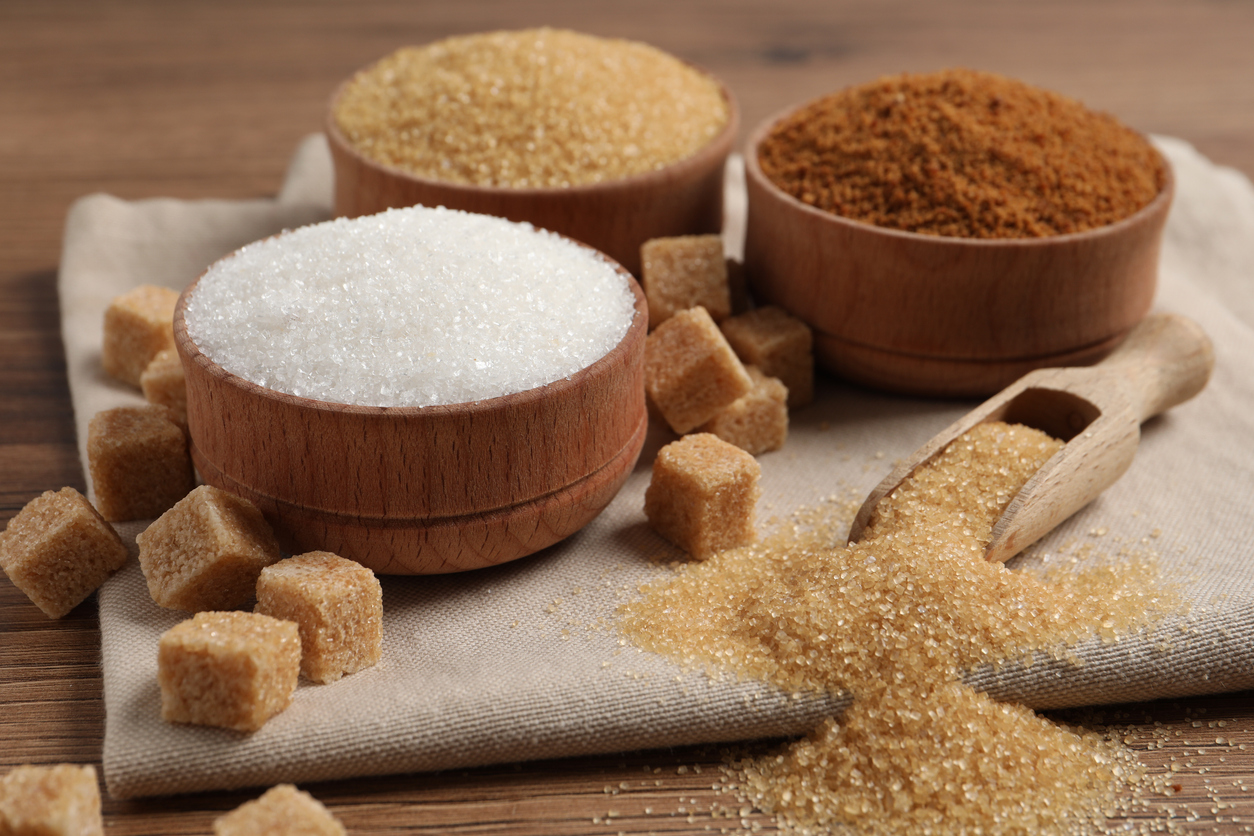
When it comes to baked goods, satou (砂糖; sugar) is one of the most crucial ingredients. Nearly every recipe calls for some type of sweetener to either activate the yeast in bread or add flavor to pastries.
上白糖 (jouhakutou; “white sugar”)
Used almost exclusively in Japan, jouhakutou is a white sugar that has bisco, a type of sugar liquid, added to it during the manufacturing process. This increases the moisture content of the sugar, making it sweeter and more enjoyable. This can, however, alter your recipes ever so slightly due to this process.
グラニュー糖 (guranyutou; “granulated sugar”)
This is likely the type of sugar you are familiar with and use in your home country. It may be harder to find, depending on your supermarket or neighborhood. If you’re in a pinch, I recommend trying jouhakutou in your recipe by adjusting the amount to suit your taste buds.
三温糖 (sanontou; “light brown sugar”)
Light brown sugar has a very subtle molasses flavor, one that many bakers are familiar with. If your recipe calls for brown sugar, this is the one that will better fit the flavor profile you’re looking for.
黒糖 (kokutou; “dark brown sugar”)
In Japan, dark brown sugar is usually made from the sugarcane grown in Okinawa or Kagoshima. It has a strong, rich flavor that is distinctly Japanese. Because of its refining process, it’s considered healthier than other sugars.
Since Japanese dark brown sugar lacks molasses, as found elsewhere, I recommend tasting it before using it in any baked goods.
ラカント(rakanto; “monk fruit sweetener”)
Gaining popularity for its health benefits and ease of use, Lakanto can serve as a suitable substitute for regular sugar. It can be pretty pricey, but for those with diabetes or concerned about calories, this is the perfect addition to your baking arsenal.
粉砂糖 (kona zatō; “powdered sugar“)
Whether you need it for making a frosting or adding air to a delicious cheese tart, this is the sugar you’re looking for. It’s not always easy to find in the supermarket and might require a trip to an imported goods shop.
Types Of Dairies in Japan
 © Photo by iStock: Synergee
無塩バター (musen bataa; “unsalted butter”)
有塩バター (yuuen bataa; “salted butter”)
マーガリン (maagarin; “margarine”)
Be aware that butter-flavored or butter margarines can sometimes look misleading with バター labels, but are obviously not the real thing if what you’re looking for is real butter. Real butter will typically have only two ingredients: 生乳 (seinyu; raw milk) and salt (if you prefer salted butter).
生クリーム (nama kuriimu; “fresh cream”)

If you’re planning to make whipped cream or cheesecake, I recommend looking for nama kuriimu with a fat content of around 35-47%. To ensure it’s made from real milk, check the ingredients by looking for クリーム (cream), 牛乳 (gyuunyuu; milk) or seinyu.
Pre-made ホイップ (hoippu; whip or whipped cream) is convenient for when you’re in a hurry, but it contains a variety of other ingredients, including vegetable oils and emulsifiers that you might not be interested in.
Japanese Cheat Sheet For Other Baking Essentials
 © Photo by iStock: Satoshi-K
Ingredients
| Japanese | Romaji | English |
| ベーキングパウダー | beekingu paudaa | Baking powder |
| 重曹 | juusou | Baking soda |
| ドライイースト | dorai iisuto | Dry yeast |
| バニラエッセンス | banira essensu | Vanilla essence |
| ココアパウダー | kokoa paudaa | Cocoa powder |
| チョコチップ | choko chippu | Chocolate chips |
| アーモンドプードル | āmondo pūdoru | Almond powder |
| コーンスターチ | kōn sutāchi | Cornstarch |
| ゼラチン | zerachin | Gelatin |
| はちみつ | hachimitsu | Honey |
| メープルシロップ | mēpuru shiroppu | Maple syrup |
| 食紅 | shokubeni | Food coloring |
Equipment/Tools
| Japanese | Romaji | English |
| 泡立て器 | awatateki | Whisk |
| ゴムベラ | gomubera | Rubber spatula |
| 木べら | kibera | Wooden spoon |
| ボウル | bōru | Mixing bowl |
| ふるい | furui | Sifter (flour sieve) |
| 計量カップ | keiryō kappu | Measuring cup |
| 計量スプーン | keiryō supūn | Measuring spoon |
| 泡立て器 | awatateki | Whisk |
| めん棒 | menbō | Rolling pin |
| オーブン | ōbun | Oven |
| オーブンシート | ōbun shīto | Parchment paper |
| クッキングシート | kukkingu shīto | Baking sheet |
| ケーキ型 | kēki gata | Cake pan |
| マフィン型 | mafin gata | Muffin tin |
| クッキー型 | kukkī gata | Cookie cutter |
| 冷却ラック | reikyaku rakku | Cooling rack |
| キッチンスケール | kicchin sukēru | Kitchen scale |
| ハンドミキサー | hando mikusā | Hand mixer |
| オーブンミトン | ōbun miton | Oven mitt |
Where To Buy Baking Ingredients & Equipment in Japan
 © Photo by iStock: hanapon1002
- Tomizawa Shoten (Nationwide): One of Japan’s most famous baking and bread-making supply chains that offers thousands of ingredients (flour and nuts to dried fruit, chocolate and baking molds).
- 212 Kitchen Store (Nationwide): A kitchen-goods retail chain that carries a wide range of cooking and baking tools.
- Decora-Shop (Online): A confectionery tool store with adorable cookie cutters and imported baking tools.
- Cotta (Online): A major supplier of baking and bread-making ingredients, as well as wrapping and packaging materials.
- Il Pleut Sur La Seine (Online): An online shop offering premium confectionery ingredients and high-quality imported items.
3 Must Visit Baking Supply Shops in Kappabashi, Tokyo
Kappabashi in Asakusa is “Tokyo’s Kitchen Town”. It’s a dream destination for anyone who loves baking or cooking. Here are three must visit shops to check out while you stroll:
- Majimaya Kashi Doguten: A long-established shop with over 6,000 baking tools like high-quality molds, cookie cutters or traditional Japanese baking utensils.
- Asai Shoten: A favorite among both professionals and home bakers, this shop specializes in bread-making and Western-style baking tools like durable aluminum bakeware, loaf pans and cake rings.
- Kama-Asa Shoten: Although best known for its high-quality kitchen knives and cast-iron cookware, this shop also carries a selection of premium baking utensils and temperature control tools.
Where To Find Imported Goods in Japan
If you need specialty items like self-raising flour, baking soda or food coloring, check:
- Kaldi Coffee Farm
- Costco (Membership required)
- Online (Rakuten, Amazon Japan, iHerb)
- Daiso: Surprisingly, some Daiso stores sell baking soda. However, double-check that the one you’re buying is food-grade baking soda to ensure safety.
Adapting Recipes To Fit Japanese Life
For many recipes, you might find yourself converting cups to milliliters or grams, keeping in mind that every country considers a ‘cup’ to be a different size. In Japan, one standard cup is equivalent to 200 milliliters. I highly recommend buying a scale as soon as possible to help weigh ingredients more easily in grams.
The other major caveat associated with baking in Japan is the limited availability of ovens. Should you decide to buy one, you’ll quickly realize that ovens in Japan are relatively small and the temperature isn’t quite as high as those in other countries.
For the first three years of living in Japan, I did most of my baking experiments with microwave and toaster oven recipes. I have even baked bread on my stovetop using a pot and lid!
If you have a favorite recipe or advice on baking without an oven or the right ingredients in Japan, please share it in the comments below to help fellow baking enthusiasts!
Comments
Leave a Reply


Related Articles You Might Like
Kaki Recipe: Halloween Persimmon Fruit Cake
Bringing Halloween to the table in its sweetest taste.
By Fiona Uyema

Recipe: Spiced Kabocha (Japanese Pumpkin) Pie
You’ll be reaching for more than one slice of this fall-flavored dessert.
By Amya Miller

Biwa: Japanese Apricot & Sweet Lemon Bars Recipe
The sweet-sour taste is absolutely addictive!
By Amya Miller

Recipe: Sakura Basque Cheesecake
The Basque burnt cheesecake from Spain gets a spring-themed makeover.
By Rika Hoffman
What a wonderful guide. I also researched these things. But never put it to paper. Great job.