Ijime: Bullying in Japanese Schools
Modern Bullying Attacks Not Just The Odd Ones Out

The Japanese word "ijime" sounds much more sinister than its English translation, bullying.
Bullying in Japanese schools, or ijime, is an entrenched problem. To the degree that modern bullying attacks not just the odd ones out, the pressure on foreign or part-foreign children in Japan may have decreased compared to previous generations, but the odds are not in their favor, nor in anyone else’s. Every child is a potential victim of modern bullying.
A recent scandal involving a senior high school baseball team that withdrew from Japan’s national tournament after alleged abuse of a junior member has brought renewed attention to this issue. Recent increased efforts by educational institutions to resolve and eradicate the harassment offer some hope.
What’s Considered Bullying in Japan?
 © Photo by iStock: Hakase_
Japan’s Ministry of Education (MEXT) has monitored ijime cases since 1985, gradually broadening definitions to reflect modern realities—including bullying outside school grounds and online harassment.
MEXT defines bullying as:
An act by a student or students toward another student that causes physical or psychological suffering, as judged from the standpoint of the child who feels bullied.
Whether suffering has been caused or not is judged based on the standpoint of the child who has been bullied. It’s a broad definition aimed at encompassing the diverse nature of today’s cruel tactics.
A Persistent Issue
Bullying in Japanese schools has been deeply ingrained for generations. A 2013 study by the Tokyo Metropolitan School Personnel Training Center found that 66.2% of children surveyed had been bullied, and 46.9% had both been bullied and bullied.
Though awareness and policies have improved since then, the landscape has evolved rather than disappeared, and reported bullying cases continue to climb.
Latest National Figures (FY2024, Reported in 2025)
Although these numbers reflect reported cases, experts note that substantial underreporting may still exist.
| Category | Number | Details |
| Total reported bullying cases | 769,022 | Record high, +5% YoY |
| Serious bullying cases | 1,405 | Cases with major physical or psychological harm |
| “Resolved” cases (per schools) | ≈76% | Varies by school and region |
Types Of Bullying in Japan
 © Photo by iStock: Kayoko Hayashi
In recent years, bullying has shifted to target children over minor misunderstandings, group conflicts or online rumors. While diversity visibility has increased, children of mixed cultural backgrounds or newly arrived foreign families can still face exclusion or misunderstanding.
Most forms of modern bullying leave no visible signs, and some camouflage it in ambiguity. It includes actions that might otherwise be regarded as just fooling around, such as hiding a person’s bags or shoes or scribbling on their books.
In many cases, the rest of a group or class bullies a single child and may even band together to deny those actions if questioned by a parent or teacher. For bullies, being part of a group of people doing the same thing diminishes their sense of responsibility for their actions.
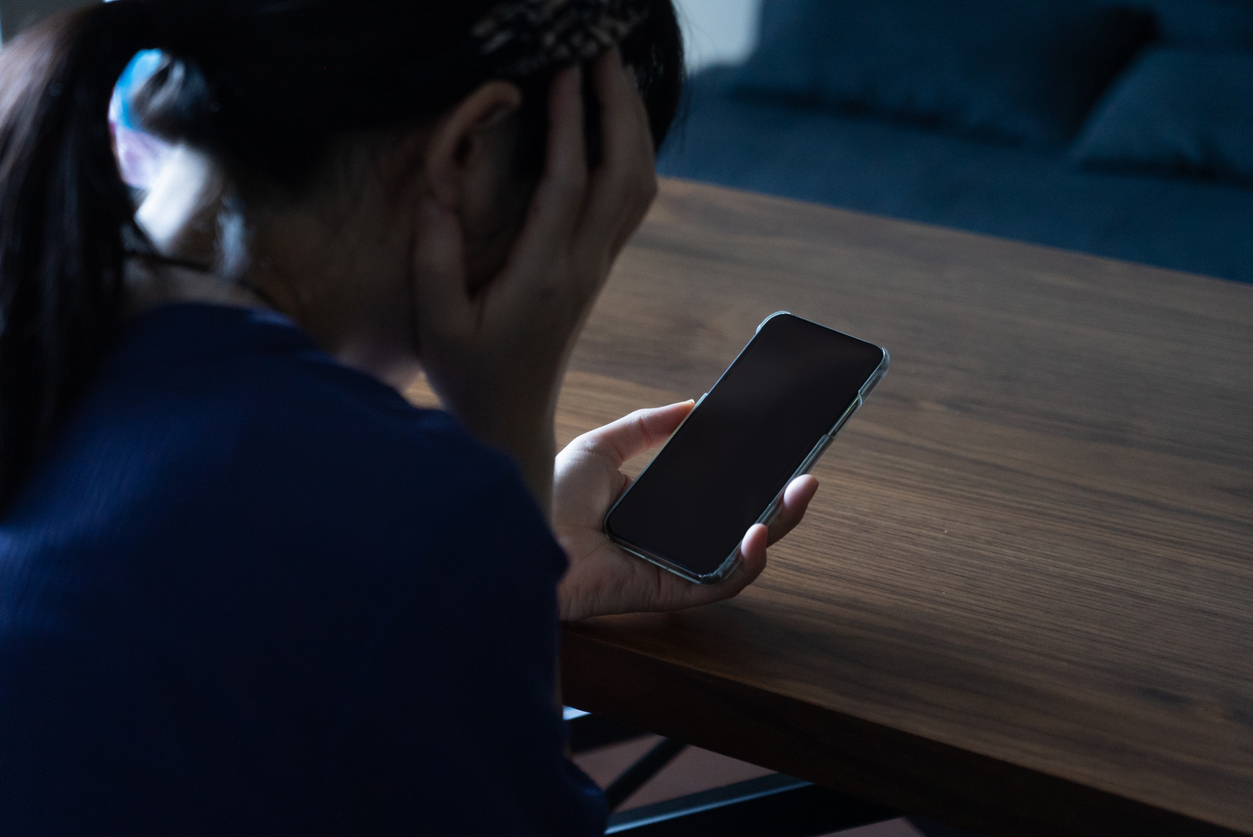
The internet has also provided new and anonymous forms of ijime, further advancing the bullies’ sense of it being a game. Victims may find slanderous comments about them on social media platforms, or have photos or their address posted online, or repeatedly receive insulting messages.
MEXT data shows:
- Teasing, insults, repeated negative comments: Still the most common
- Group exclusion and silent treatment: A uniquely persistent form in Japan
- “Play-acting” violence: Poking, hitting, kicking disguised as “jokes”
- Online harassment and social media exclusion: Rapidly increasing, often happening in private chat groups or group LINE messages among classmates
- Forced acts, humiliation: This includes coerced “apologies” or dares
Bullying Peaks Around Middle School
 © Photo by iStock: urbancow
An examination of when bullying occurs reveals one key reason as to why it occurs. MEXT research shows that cases rapidly increase from grade five of elementary school through to junior high school, with the majority of reported incidents emerging in the first grade of junior high school.
That period—around 13 years of age—coincides with adolescence and the physical and emotional growth of children, particularly the formulation of self-identity. Kids’ growth on the physical and emotional levels at this time can cause them stress and dissatisfaction, and bullying acts as an outlet for those feelings.
For bullies, experts note that many have issues at home or at school that are causing them stress, worry or a sense of inferiority, and they release those frustrations via their attempts to control others or attack them.
The Onlooker Issue
The dynamics of ijime include not only the bully—or bullies—and the victim, but also those nearby: onlookers who fall into two categories, the audience and the bystanders. The audience enjoys the show that the bullies put on. Bullies interpret that enjoyment as support for their actions, and that intensifies their actions.
Bystanders pretend they haven’t seen what is going on, most often because they fear that voicing an objection to it will make them a target. The bullies interpret this as implicit support. Many experts believe that the actions of onlookers can alter the direction of ijime.
If students could see that, in the long run, verbally objecting to the bullies helps their own situation because it weakens the bully and his actions, a key mechanism of ijime would wind down—but that’s a hard ask for a young child.
The social view of ijime has been a dark one: inhumane actions shrouded in silence and impossible to resolve. If there is no prospect of a solution, there is little incentive to report it to a teacher or parent.
Government Action & Policy Progress
 © Photo by iStock: ferrantraite
In 2013, Japan passed the Ijime Prevention Methods Promotion Law, which requires schools to:
- Investigate bullying regularly (student surveys)
- Report suspected cases immediately
- Develop structured response systems
- Train educators and monitor cases closely
The law was passed after public outcry over the handling by a junior high school in Otsu City, Shiga Prefecture, and the board of education there, of the 2011 suicide of a second-grade student who was being bullied intensely.
The school initially denied that such actions had occurred. However, questionnaires among their students returned numerous accounts of bullying of the boy, verifying that the school tried to keep the information secret. When such accounts eventually emerged in news reports, the board of education downplayed the answers as being only hearsay.
A number of students also stated in the questionnaires that the boy’s homeroom teacher was aware of the bullying, had even witnessed it and laughed about it. Numerous other accounts said the boy had been repeatedly punched and kicked, told to die and forced to “practice” committing suicide almost daily.
It was widely considered that both the school and the local board of education had attempted to cover up the bullying, its connection to the child’s death—which occurred at home—and their responsibility for the events.
Does The Ijime Prevention Law Actually Work?
The law aims to prevent the recurrence of the structural problems that allowed the Otsu City boy’s case to go unchecked. It places responsibility for bullying on national and local authorities, as well as schools.
Although other cases of bullying have come to light even after its introduction, the ijime prevention law is at least a step in the right direction. It helps bring the problem out of the shadows so that we can see what is going on.
Under MEXT’s instruction, teachers are taking the stance—and teaching students—that ijime is unconscionable. The history of it so far has taught us that even though students may downplay it as just a little slap or joke, just like all the other kids are doing, every act of bullying causes pain.
To uphold our own sense of morality against an opposing wave—during adolescence of all times—may be one of life’s most challenging tasks, but in the end, it is the only way forward.
Supporting Your Child
 © Photo by iStock: takasuu
Our children need our support. Make it a habit to talk with your child about their day and things that have happened at school, so that they feel comfortable coming to you if they have a problem. To prevent raising a bully, help your child experience compassion and caring for others from an early age.
If you suspect your child is being bullied but isn’t saying so, ask them how they spend their school recess periods and with whom, and inquire about how their good friends are doing lately.
Signs Of Bullying
- Silence
- Reluctance to attend school
- End of contact with good friends
- Talks less about school and friends
- Stealing money from home
- Unexplained bruises
- Damaged school supplies
- Excessive concern about their phone
If your child encounters bullying, listen carefully to what they say and how they want to approach the problem. Discuss the issue with their homeroom teacher and ensure that the principal is also informed. You will need to work closely with the school to overcome the problem.
Here are some options if you want to seek advice from other sources, too:
- The Tokyo Metropolitan Education Consultation Center: Holds English phone consultations on the Friday of each month, from 1 p.m. to 5 p.m. (Tel: 03-3360-4175). This free service can also arrange an in-person consultation. It is closed on public holidays.
- TELL Lifeline: Offers assistance in English to both children and parents from 9 a.m. to 11 p.m. (Tel: 0800-300-8355).
- 24-Hour Children’s SOS Hotline: Nationwide toll-free line for students facing bullying or school-related stress. Available 24 hours. (Tel: 0120-0-78310) (Japanese)
- Childline Japan: Anonymous support for children under 18, every day from 4 p.m. to 9 p.m. (Tel: 0120-99-7777) (Japanese; website available in English)
- Children’s Rights Hotline (Ministry of Justice): For human-rights issues, including bullying. Weekdays 8:30 a.m. to 5:15 p.m. (Tel: 0120-007-110) (Japanese)
- SNS Educational Counseling (Tokyo Metropolitan Board of Education): Consultation via LINE for school-related issues. (Japanese)
Bullying may never disappear entirely, but with increasing awareness, dedicated resources and open dialogue among educators, parents and students, continued progress is possible.
This article has been republished with the latest information.
Comments
Leave a Reply








Related Articles You Might Like

Preparing Your Child to Walk to School in Japan Without You
Perhaps the biggest and most immediate change that accompanies your child’s graduation from kindergarten to elementary school in Japan is her newfound independence.
Is A Japanese School Best for Your Child?
What is best for my child? It’s an age-old question, and one that is sometimes easy to answer but often very difficult. When the topic...

Raising A Child In Japan: The Three-Year Health Check
Discover all about the history and setup of Japan’s three-year health check, which targets all-around physical and social abilities, for a seamless time for you...

Battling Ingrained Sexism in the Japanese Workplace
Climbing the corporate ladder while dealing with a sexist office culture is, unfortunately, all in a day’s work for ladies in Japan. We show you...