School Holidays in Japan: What To Expect
Work Well, Play Well

Whether it's the endless reading assignments, the craft-making projects or research reports, the holiday homework-load seems just enormous.
All work and no play? Perhaps, this is the typical image many of us have of the way kids spend their school holidays in Japan. The reality may come as a surprise—the assignments are, in fact, rather light, the summer holidays are long and the schools encourage kids to make the most of the break.
The Academic Year & Holidays At A Glance
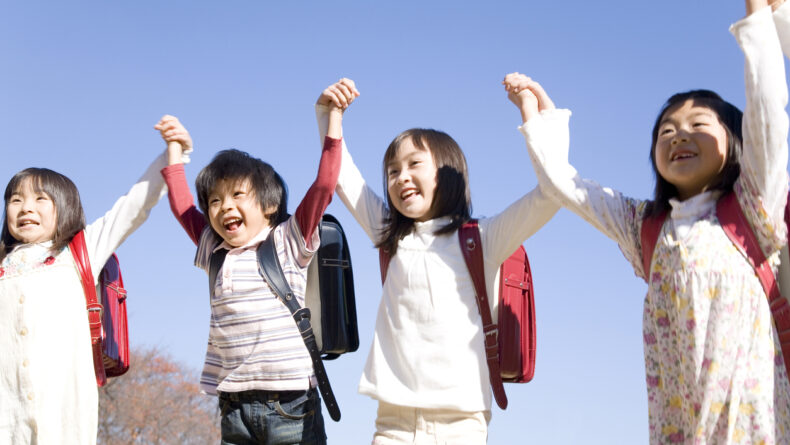
 © Photo by iStock: paylessimages
As in many countries, Japan’s school year is split into three semesters.
- Semester One: The elementary school year starts in the second week of April amid a swirl of falling cherry blossom petals. It ends around July 20 with the start of summer vacation.
- Semester Two: Classes resume near the end of August and run until the winter break begins, which is usually on December 23.
- Semester Three: The final semester then unfolds from the second week of January, and ends in late March.
When Are The School Holidays in Japan?
Using the academic calendar year guide above, the main three school holiday periods in Japan are as follows:
- Spring Break: Late March until the second week of April (Roughly one and a half to two weeks)
- Summer Break: Mid-July until the end of August (Roughly five to six weeks)
- Winter (New Year) Break: End of December until the second week of January (Roughly one and a half to two weeks)
Unlike some other countries around the world, Japan does not have an autumn break as the steady weather is considered the prime season for studies. Japan’s spring and New Year school vacations roughly coincide with Christian countries’ Easter and Christmas breaks. However, it’s important to note that Christmas Day is not a public holiday in Japan and may not necessarily be a day off for you or your child.
Other Holidays
There are no other scheduled days off apart from public holidays and the anniversary of each school’s establishment. However, students are usually given a free weekday to make up for school events (like sports festivals or music festivals) that are held on the weekend.
Specific vacation dates may also differ by region. Schools in heavily snowy areas, for example, often have summer holidays that are shorter than those elsewhere by about two weeks. Within Tokyo, neighboring school districts’ vacation schedules can differ by up to a week.
As for many countries, the summer holidays in Japan are the longest. While for British and American schools the start of summer vacation marks the end of the school year, for Japanese students, there’s still a lot of work ahead of them. This is the main reason for the existence of summer holiday homework here.
Summer Holiday Homework

The summer holiday homework that Japanese elementary schools assign consists of a range of exercises. Let’s take a look at what is generally expected from students.
Drills
Expect a book of drills in the base subjects to review what the kids have studied so far. In the lower elementary school years that will be the kanji characters (akin to English-language spelling practice) and math problems, with social studies and science questions added in the senior grades.
Growing A Plant
Another traditional summer exercise is observing a growing plant. In first grade, the subject is almost without exception a morning glory. In second grade, perhaps a tomato. The children will probably be asked to count how many flowers or fruits grow or make a few sketches of the plant as it grows.

This work teaches children that study begins with observation and requires them to spend time on it each day. That fits with the primary goal of regular homework at this level, which is to get kids into the habit of daily study, even if only for 10 minutes a day.
Research Project
Another staple of summer holiday homework is the jiyuu kenkyuu (free research project). Although the term may sound intimidating, it isn’t. Kids pick their own topics for this, with craft projects being the most popular choice. Creations produced at commercial craft classes are even acceptable. A travel diary or bug-hunting records are also popular projects, but pretty much anything goes in this category.
Reading
Reading is always encouraged at all levels when it comes to holiday homework. It usually takes the form of a three-page book review and a couple of “recommended reading cards” that require a drawing and a few sentences about the book that the child recommends.
Reading out loud has become a staple of regular homework. It is said to not only improve language skills but also boost concentration and produce a sense of calm. The material for this is usually poems and other writing from the kokugo (Japanese language) textbook.
Music Practice & Art Diaries
Other holiday tasks include practicing the recorder or melodica in the upper grades. In the lower years, they may be tasked with creating a couple of enikki (art diary) entries, in which the child draws a picture of something they have done over the holidays, with a couple of lines of written explanation included. It’s a good way to capture some of their special holiday memories.
Five days would probably be enough time for a child to complete their core summer holiday homework as quickly as possible.
Making The Most Of The Holidays
 © Photo by iStock: kokouu
Like parents, schools don’t want kids to waste their holidays on endless TV watching and game playing. They ask families to maintain proper daily routines with regular bedtimes and meals.
To help achieve this, often part of students’ summer holiday homework is also to set a goal in each area of health, study and home and track their performance over the period. Examples in each category might be to:
- Improve their baseball pitch
- Read once a day
- Run the family bath each day
Family Time
No school means more time at home, and schools encourage families to enjoy the time together and help children acknowledge their place within the family by giving them chores to do. In grade four, my daughter’s school gave the kids a list of about 10 enchanting home activities to try over the holidays.
Some of those tasks included:
- Watching the sunrise
- Making rice balls
- Washing the rice before it gets cooked
- Spotting star clusters in the night sky
- Cooking one of the dinner dishes
Schools encourage kids to use the holidays to do things only possible during a long vacation, explore their own interests and take part in community events.
Using The After School Care-System During The Holidays

For families where both parents are working, the daily, registered after-school care system run by the various wards, usually operating from 9 a.m. to 6 p.m., is maintained throughout the summer holidays. The program has different names in different municipalities, but is often called gakudo kurabu. During holidays, this service is usually available from about 10 a.m. to 5 p.m.
Service Fees
The fees for this service are often charged monthly and range from ¥3,000 to ¥7,000 for publically run centers and ¥30,000 to ¥50,000 for private centers. Prices do slightly surge during the summer holidays, so expect about a 30% increase to the monthly charge in August.
School Yard Play
During the holidays, the schoolyard is usually open for play. Called “koutei kaihou,” this often free system runs after school hours during the semester. It allows students to come and play as they please, with the permission of their parents, just signing in or out as they go. The kids are overseen by ward employees.
So, whether you’re helping the kids get their summer assignments done on time or you’re planning the family’s next beach vacation, enjoy the school holidays in Japan and teach your kids that a good rest and fun with their loved ones is one of their most important daily tasks!
This article has been updated for 2025.
Comments
Leave a Reply








Related Articles You Might Like
Preparing to Enter a Japanese Elementary School
Although the new Japanese school year doesn’t begin until April, there’s a lot to get ready before the entrance ceremony.

What Makes Code Quest Japan’s Most Dynamic Tech Camp?
Let's face it, summer vacation is just around the corner, and Tokyo parents are already scratching their heads about how to keep their kids busy...

Child Safety Tips From Japanese Schools
Have you ever been puzzled at the sight of Japanese kids taking the train alone, having a park shortcut and heading to school completely unattended?...

What To Do When: Problems Arise at Your Child’s Japanese School
Health problems, language problems, learning problems, fighting and bullying—during six years of elementary school your child is likely to face a number of issues. While...