5 Differences Between Japanese & Western Diet Approaches
From Water Drinking Habits To Food Combinations

Ever wondered how the Japanese think differently about their diet? Here are some key perspectives that can make all the difference in your approach to health.
Recently, I had the opportunity to ask a large group of foreign women living in Tokyo if they usually research health information in English (or their native language), Japanese or both. It was almost unanimous that they researched health tips in English, even if they had a good understanding of Japanese. I found this to be interesting because Japan has such a different culture around food. Tailoring Western advice to an Asian lifestyle seemed a bit redundant, especially with the differences between Japanese and Western diet approaches.
Reading an article from someone living in the United States while living in Japan makes me feel like I have to search for uncommon Western health foods, like quinoa and kale. I also feel like I have to scout out a green juice shop that opens before breakfast hours or figure out a way to bake foods when it’s not that common in Japan to even own an oven. So, for this article, I felt inspired to share the exact differences between the Japanese and Western diet approaches. I hope to give you a new perspective and raise your confidence in Eastern methods.
1. The Japanese Diet Is Broad, While The Western Diet Is Detailed
 © Photo by iStock: karinsasaki
There was a time when we didn’t have “diet science” to help us explain what was nutritionally sound for our bodies. In the East (countries like Japan, China and India), people developed a way of looking at nature for clues on how to stay healthy and how to rebalance ailments in the body.
Eat Seasonally
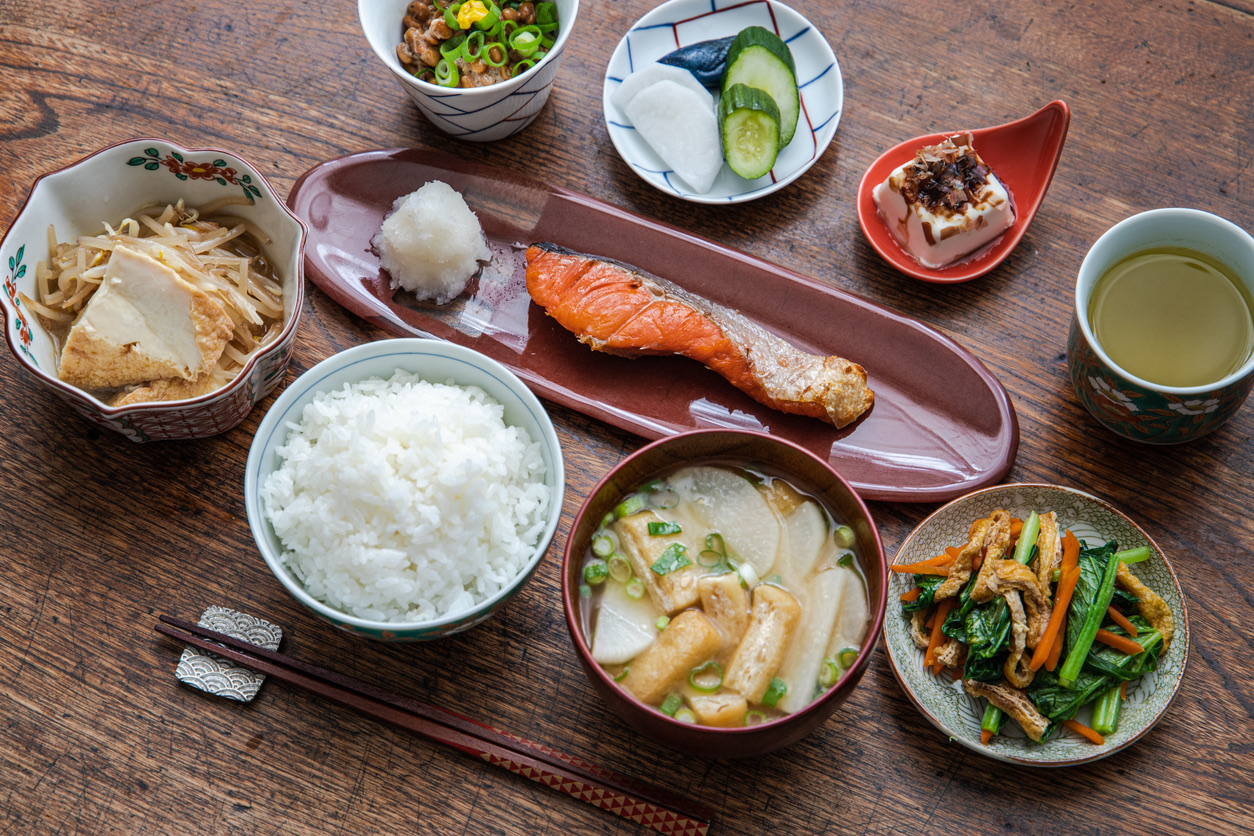
The most obvious one would be to eat according to the seasons. The idea is that the earth offers us exactly what we need to acclimate our bodies to our climate. You’ll easily notice this in a Japanese teishoku (set meals). While the main set is the same throughout the year, with some animal or vegetarian protein, vegetables, rice, soup and pickles, the vegetables are always interchanged as the seasons change.
Other broad attributes of the Japanese diet would be considering things like:
- How fast or slow foods digest in our body.
- Whether they make us feel uplifted or relaxed.
- If the foods cause our body to contract or to expand.
In other words, they look at properties you can understand with your senses.
In The Details
Westerners, on the other hand, like to discuss the nutritional makeup of individual foods in detail. They use language like “protein,” “carbs,” “calories,” “vitamins,” “minerals” and “fiber” to discuss the best way of eating.
The pro of thinking in this way is that you can get very specific on how to make a change to your body. However, the big con is that almost none of it is intuitive. You can’t feel or sense in your body just how much Vitamin A you got from eating a carrot. You’d only be able to know the information in numbers after Googling how much of it you ate.
So, while the scientific way of looking at diets is specific and logical and can be really beneficial for someone like an athlete who needs these specifics to improve their performance, it’s not really instinctive or something you can naturally keep up with.
2. The Japanese Diet Includes A Variety Of Everything
 © Photo by iStock: millionreason
Continuing on about Japanese teishoku, you’ll also notice that the Japanese eat a variety of foods. Instead of having larger quantities of two or three food items (like steak with potatoes and a side salad in the West), they eat smaller quantities but with more varieties of foods (e.g., fish, soup, rice, pickles, green vegetables, root vegetables and a side salad).
In Western culture, people usually try to diet by cutting out one kind of food group or highlighting another, be it limiting carbohydrates and sugar or increasing protein. However, the Japanese and many other Eastern cultures choose to have a variety of everything that helps them maintain an overall balance.
When you eat a bit of everything, you’re providing your body with a wide spectrum of nutritional content. Plus, you get a variety of flavors to satisfy your palate.
3. The Japanese Diet Combines Foods To Optimize Digestion
 © Photo by iStock: kuri2000
The Japanese are very conscious about combining foods to optimize digestion. Whenever you have oily or fried foods in Japan, you’ll notice them served with grated radish or cabbage. Having these as a garnish helps the body digest fatty foods.
Other fermented food items like pickles and miso soup contain healthy bacteria that help our body digest foods from our overall meals, too. So even if you’re having something heavy like animal products, or something refined like white rice, the bacteria from fermented food items can help with digestion.
Even if you’re having Western fried foods, creamy foods or hard-to-digest animal proteins, aim to add foods that ease digestion. This includes mushrooms, burdock, radishes, leafy greens and citrus such as a drizzle of lemon juice.
4. Hydration In The West Is Achieved Mainly Through Water
 © Photo by iStock: Yuuji
The most common solution to “staying hydrated” in the West is to drink more water. I often hear of people frustrated that they didn’t get in their recommended eight cups of water per day. Or that they would drink more if it didn’t feel so uncomfortable having water sloshing around in their stomachs. Instead of thinking about getting hydrated solely from drinking more water, why don’t we take a look at whether our meals themselves are hydrating or dehydrating?
In the West, if you have a sandwich with coffee for lunch, the bread itself is dry (because the water is baked out). Cold cuts have zero water content and the coffee is dehydrating. In a Japanese teishoku, however, the rice is cooked in water, the vegetables themselves have high water content and traditional meals include hydrating soups. Instead of trying to hydrate your body by drinking a lot of water, it’s important to eat more hydrating meals.
5. Japanese People Don’t Drink Much Water With Meals
 © Photo by iStock: JohnnyGreig
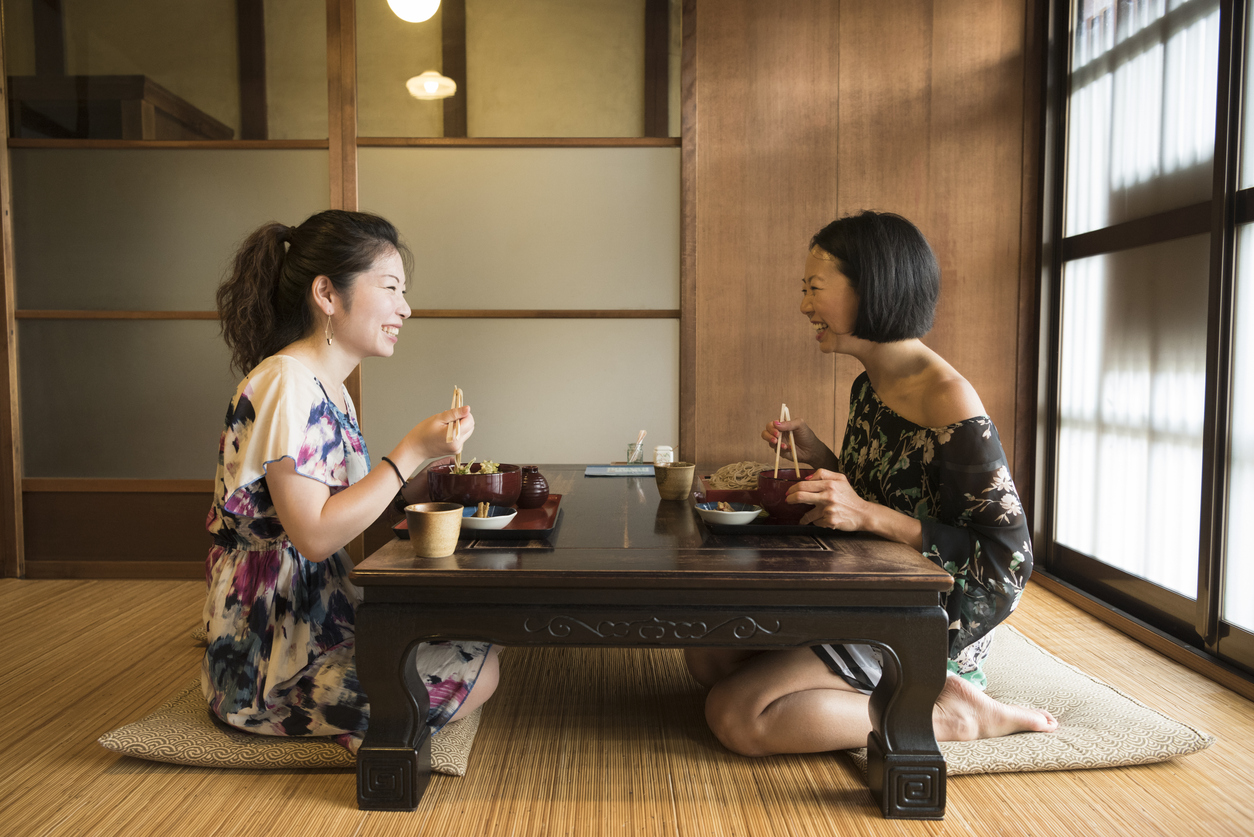
Stemming off the previous point on hydration, you might also notice that Japanese people don’t really drink a lot of water with their meals. If you go to a Japanese restaurant for lunch, you might receive a very small cup of water or tea. However, in the United States, for example, you’re usually provided with a large glass of ice water that constantly gets refilled.
In Eastern health philosophies, water is believed to “douse” your “digestive fire.” That’s code for “water will make it difficult for your body to digest foods.” However, dietitians around the world seem to have opposing views about this. There seem to be no concrete studies proving that excessive water can interrupt the digestive process by diluting your stomach acid.
A common view that many Japanese dietitians do have, though, is that drinking a lot of water during your meals makes you chew your food less, which may contribute to bad digestion. They say that slugging down water while eating tends to make you rely on it to push your food down and, hence, make you chew it less. Chewing food is very important for digestion and bettering your metabolism—especially if you’re looking to lose weight—so the point of this isn’t to say you should never have water with meals. It’s to help you recognize that having a little bit if you’re thirsty is fine as long as you’re not glugging down glass after glass.
As I mentioned in the previous point, instead of simply adding water on the side to your meal for hydration, it may be ultimately best to choose hydrating foods that contain high water content, like soups.
Taking Notes
As you can see, there are some important aspects of how Japanese people eat that aid in health and digestion. They go beyond just looking at food from a scientific perspective. Eastern philosophies help us understand how to rebalance our bodies using our senses. It can give you a lot more confidence in the choices you make in your daily food life.
What do you think about the differences between the Japanese and Western diet approaches?






Related Articles You Might Like

3 Common Japanese Health Practices (That Aren’t Hard To Follow)
Made a resolution to get healthy in 2018? Take advantage of these effect-proven health tips from Japan.

6 Healthy Japanese Snacks For You and Your Kids
Add some adventure to your snack time as you teach your child good food habits through culinary courage.

Kid-Friendly Japanese Food
Renowned for its sophisticated presentation, taste and rich nutrients (that we believe are linked to longevity), there's much about Japanese cuisine that fascinates the foreign...
By Lisa Hong

5 Easy Japanese Ways To Replace Expensive Supplements
There are so many products on the market, everyone has an opinion on what’s best, and every product promises magical results. Truth is, all those...
Leave a Reply